CDF Edition 033 Monday August 10, 2026
POLITICSBy ZPP Newsroom
Source: News Diggers
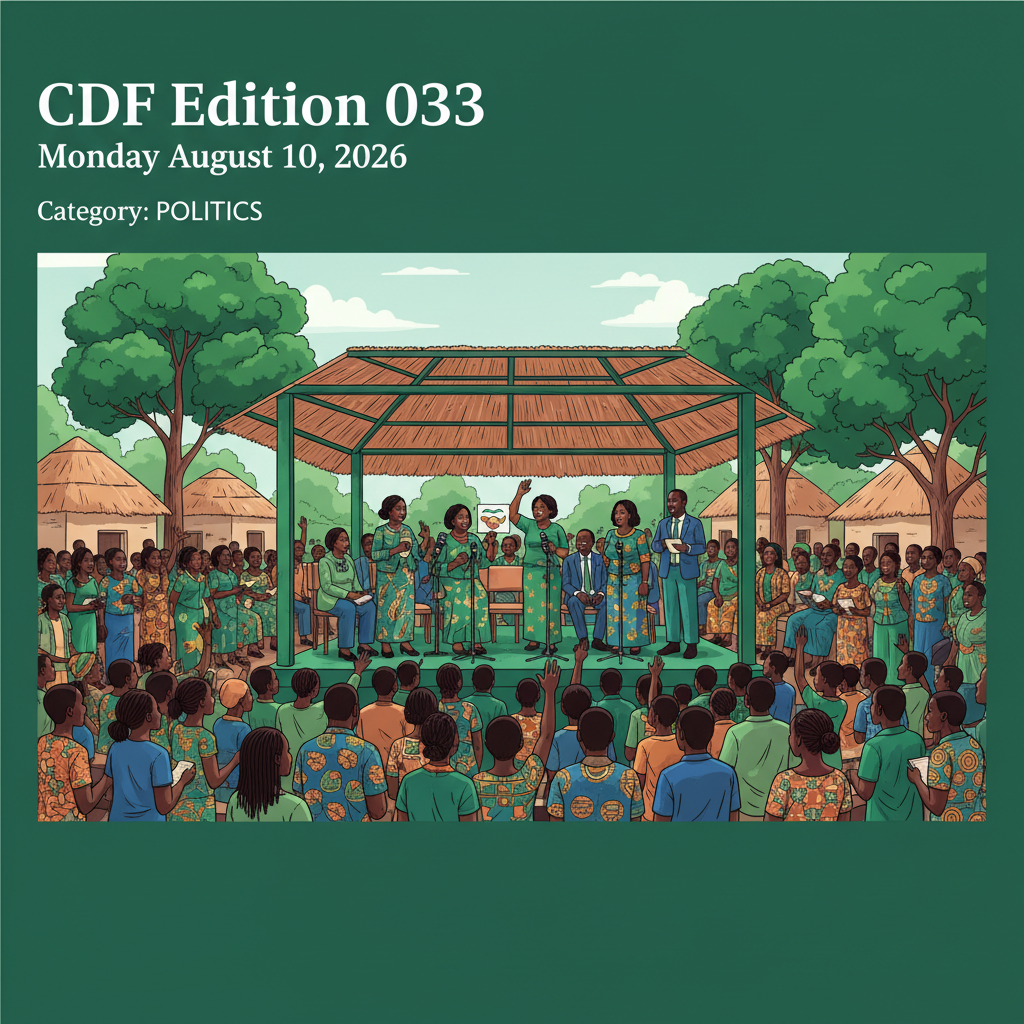
The political discourse surrounding Zambia's fiscal decentralisation policy has reached a critical juncture, with the Constituency Development Fund (CDF) standing out as the defining trump card for the governing administration ahead of the 2026 polls. Having seen allocations scale up dramatically from a modest K1.6 million per constituency in 2021 to a substantial K40 million in the 2026 national budget, the decentralized fund has become a focal point of both praise and intense political contestation. Across various provinces, local authorities have reported tangible community-level transformations, including the procurement of heavy road machinery, the construction of health annexes, and the expansion of educational facilities. Proponents of the decentralized financing model argue that it marks a fundamental shift in how national wealth is distributed, effectively transferring decision-making power from Lusaka straight to the grassroots wards. In districts like Kitwe and Chililabombwe, newly acquired earth-moving equipment and scores of completed infrastructure projects are frequently cited as concrete evidence of the policy's efficacy. Furthermore, complementary public sector recruitment drives—bringing tens of thousands of teachers and health personnel into formal employment—have interwoven with the CDF framework to bolster rural livelihoods and service delivery. However, the ambitious initiative is not without its detractors. Opposition figures, notably from groupings like the NRPUP, have launched scathing critiques against the execution of the fund, labeling various components inefficient and claiming that ordinary citizens have seen minimal relief from systemic poverty. Critics point to persistent administrative bottlenecks, procurement delays at the council level, and sporadic political interference as vulnerabilities that undermine the true intent of the policy. These opposing political camps argue that a restructuring or outright overhaul of the current a