Zambia Votes - Who's Who and What Issues Are Shaping the Elections?
POLITICSBy ZPP Newsroom
Source: AllAfrica Zambia
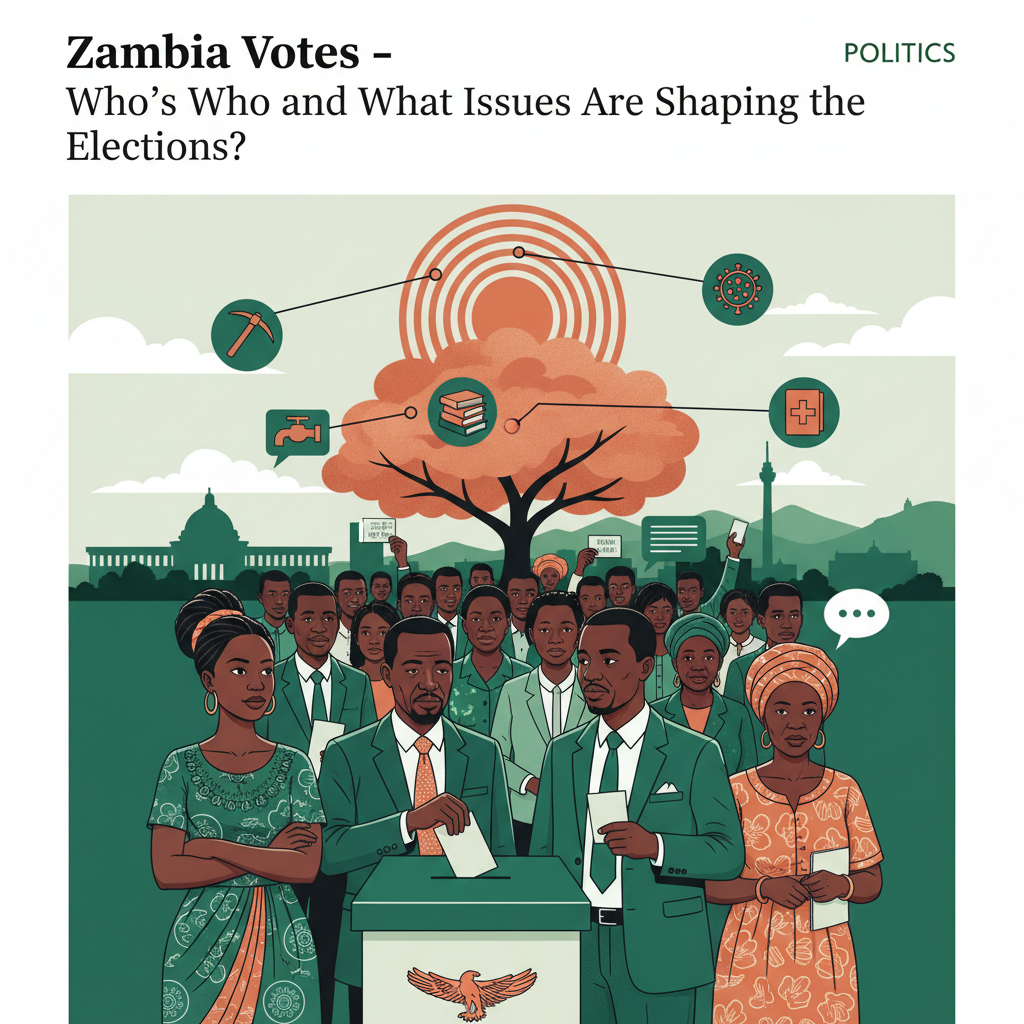
As Zambia prepares for the crucial general elections on August 13, the political landscape has crystallized into a fierce contest dominated by formidable political coalitions. Heading into the polls, incumbent President Hakainde Hichilema and the ruling United Party for National Development (UPND) find themselves anchoring a broad alliance backed by 15 smaller parties. This expanded coalition seeks to solidify a second term for Hichilema, building on a platform that emphasizes macroeconomic stabilization, debt restructuring under the G20 Common Framework, and structural expansions like the Constituency Development Fund. Opposing the ruling establishment is the newly consolidated Tonse-Pamodzi Alliance, spearheaded by presidential candidate Brian Mundubile and running mate Makebi Zulu. The opposition coalition amalgamates remaining structures of the former ruling Patriotic Front (PF) alongside various smaller opposition factions. Campaigning under constraints and navigating a shifting political environment, the opposition has attempted to frame the election as a referendum on the rising cost of living, persistent youth unemployment, and the pace at which macroeconomic reforms translate into tangible relief for ordinary households. The 2026 electoral cycle is uniquely historic, marking the first national test of Zambia's newly reformed mixed-member electoral system following recent constitutional adjustments. With Parliament expanded to 226 constituency seats alongside specialized quotas reserved for women, youth, and persons with disabilities, the architecture of representation has fundamentally shifted. Furthermore, the campaign period has been characterized by an unusual visual calm in urban centers like Lusaka, with lower levels of traditional ostentatious spending and widespread billboard displays compared to previous election cycles. International observers, civil society watchdogs, and regional bodies are monitoring the polls closely, recognizing Zambia's pi