Presidential Vote Fragments Across Regions
POLITICSBy Zambian Observer — Zambian Observer
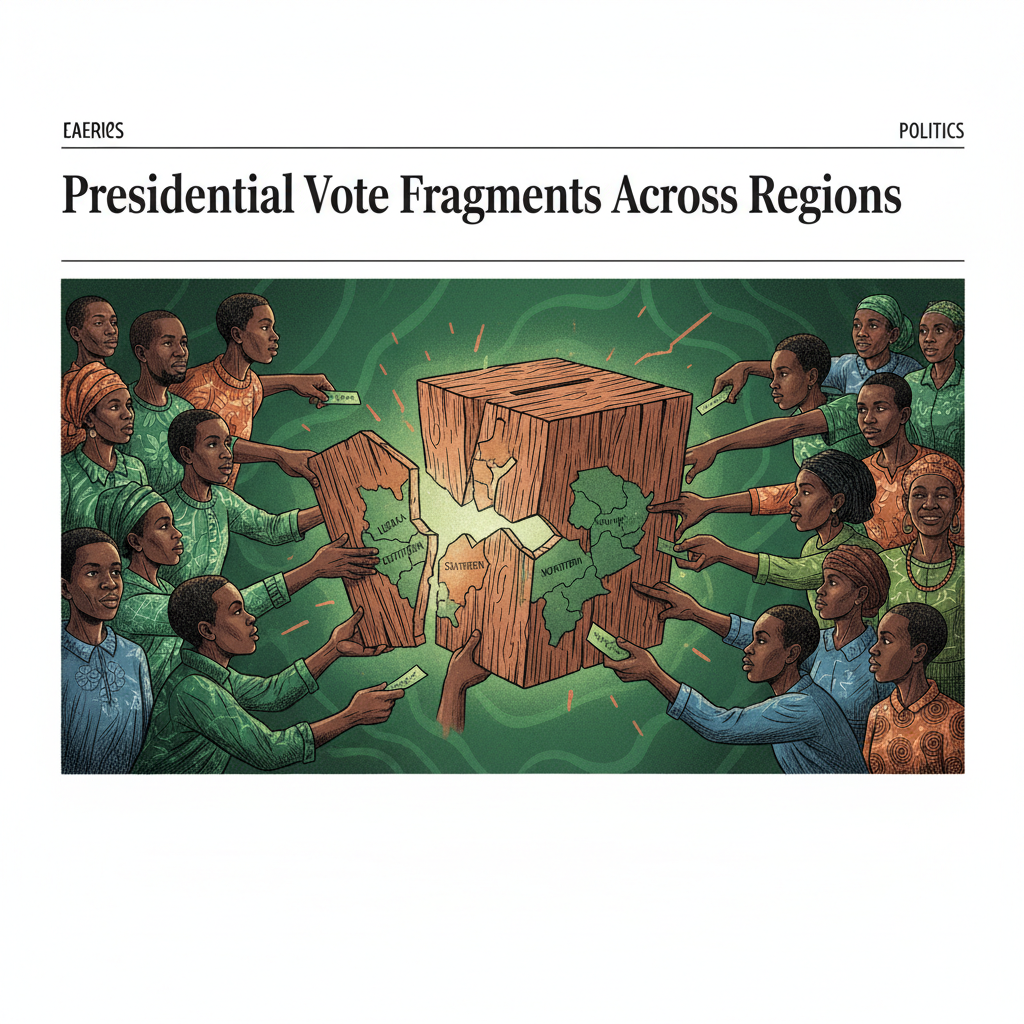
As vote-counting progresses across Zambia following a tense and closely watched general election, early presidential returns are painting a remarkably complex picture. Political analysts note that the emerging electoral map defies the predictable regional blocs that have historically dominated Zambian politics. Rather than following strict traditional lines of strongholds, preliminary tallies suggest a more fragmented distribution of votes between President Hakainde Hichilema's administration and various opposition factions. The high-stakes poll has served as a referendum on the government's economic policies, particularly debt restructuring and structural reforms championed over the past five years. While urban centers like Lusaka and the Copperbelt have experienced intense economic pressures and shifting voter sentiments, rural provinces are also displaying unexpected nuances in ballot distribution. Observers from the Electoral Commission of Zambia (ECZ) and international missions emphasize that these early numbers are preliminary, yet they already signal a maturing electorate less bound by rigid partisan or geographical loyalties. Campaign narratives had largely framed the contest as a binary choice between continuity under the ruling United Party for National Development (UPND) and a fragmented opposition seeking a mandate centered on the rising cost of living. However, the ballot fragments arriving from diverse constituencies indicate that voters are splitting tickets and evaluating local economic realities independently of broader national trends. This granular division of the vote underscores a growing demand for tangible service delivery and localized accountability from leadership. As the nation awaits final verification and tabulation from the ECZ, civic leaders and peace advocates have urged calm across all regions. The integrity of the electoral process remains paramount as political parties monitor the incoming data streams from remote and urban poll