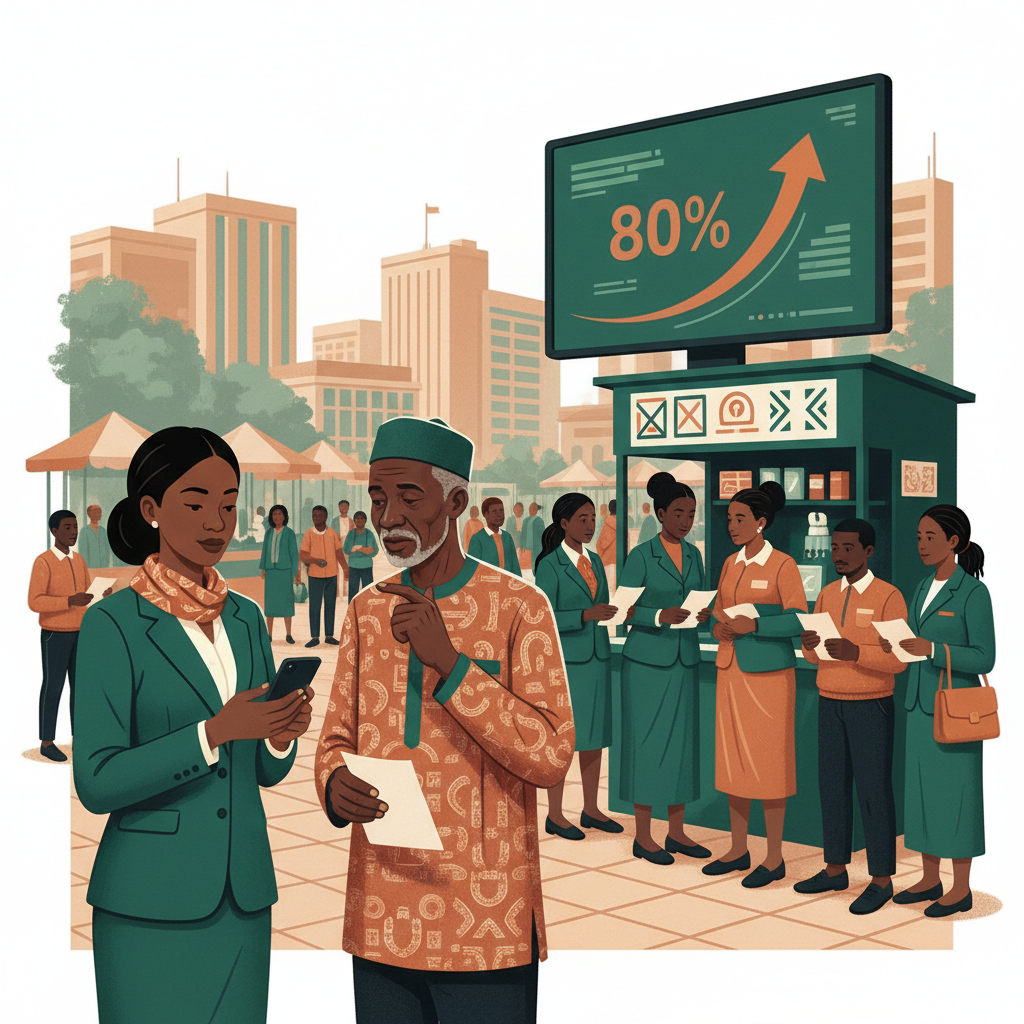
LUSAKA β For the first time, four out of five Zambians can save, borrow, or send money without stepping inside a traditional bank.
According to the 2025 FinScope Topline Survey released Wednesday at Mulungushi International Conference Centre, financial inclusion in Zambia has surged to 80.1% β a dramatic jump from 69.4% in 2020.
But behind the celebration lies a more nuanced and uncomfortable question: Are we becoming a nation of better-connected borrowers, rather than genuine savers?
Zambia is not simply "banking" itself. Instead, the nation is racing toward a hybrid system that pairs the speed of mobile money with the deep trust of community savings circles like Chilimba and village banks. Yet access does not automatically mean prosperity.
By the Numbers
| Year | Financial Inclusion (%) |
|---|
| 2015 | 59.3% |
| 2020 | 69.4% |
| 2025 | 80.1% |
Other key figures:
- Formal inclusion (mobile money, bank accounts): 76.4% (up from 61.3% in 2020)
- Informal inclusion (Chilimba, SACCOs, village banks): 52.0% (up from 32.3%)
Note: These figures overlap β many Zambians use both formal and informal systems side by side.
Mobile Money: The Main Driver
For the average Zambian, the phone in their pocket has become their primary bank branch β and for many, their primary source of high-interest loans.
Mobile money is the undisputed locomotive behind this growth. Digital platforms are now outperforming traditional brick-and-mortar banks in reaching the unbanked, especially in rural areas where no bank has ever set foot.
βThis confirms what we have observed on the ground,β says the Pulse News Desk. βDigital lending and mobile payment ecosystems are no longer 'alternative' options. They are the backbone of the Zambian economy β for better or worse.β
Why Chilimba & Village Banks Are Booming
Despite the rise of high-tech apps, the most surprising finding in the 2025 survey is the massive spike in informal inclusion β from 32.3% to 52.0%.
Zambians are leaning into community-based financial institutions more than ever. The survey points to wider usage of:
- Chilimba (traditional savings circles)
- Village Banks
- Savings Groups
- SACCOs (Savings and Credit Co-operatives)
βI keep daily cash on Mobile Money, but my funeral savings stay in Chilimba,β says Lusaka market trader Grace B. βThe phone canβt shame you if you miss a contribution. And my Chilimba group won't lend me money I can't pay back.β
This suggests that while Zambians appreciate the speed of digital tools, they still value the social safety nets and peer accountability of local savings groups β groups that often say "no" when a bank app says "yes."
3 Big Questions for 2027
As Zambia moves toward 2027, these numbers present a dual reality for the New Dawn administration and the private sector:
1. Infrastructure Demands
With 80% of the population now "included," the pressure on digital infrastructure and network stability is at an all-time high. When MTN or Airtel goes down for an afternoon, 80% of the financially active population is frozen.
2. The Literacy Gap
Access to a mobile wallet does not always equal financial security. Having a mobile wallet doesn't teach you to spot a loan shark charging 20% weekly interest. As more Zambians enter the formal system, consumer protection and digital literacy become the next great challenge.
3. Digital Lending Regulation
The data confirms a massive appetite for digital-first financial products. The question is whether our regulations can keep pace. The 2025 data suggests Zambia now needs a Digital Credit Act, not just voluntary codes of conduct β before the borrowing boom turns into a debt crisis.
The Bottom Line (Pulseβs Take)
Here is our early judgment:
Inclusion without protection is just exposure. And access without literacy is a debt trap.
The 80% milestone is a genuine win for access. But the next government and the Bank of Zambia will be judged on a harder question: Is that access lifting people up, or simply hooking more Zambians into digital debt that they do not fully understand?
The 2025 FinScope results prove that the Zambian consumer is evolving faster than many anticipated. We are a nation simultaneously embracing the future of FinTech while doubling down on the community traditions of the village bank.
The Pulse will keep watching to see if this inclusion translates into actual poverty reduction β or if our answer to the headline becomes a painful "yes."
π Methodology Note
FinScope Zambia 2025 Topline Survey was conducted by the Bank of Zambia with technical support from FinMark Trust. Sample: approximately 12,000 Zambian adults (18+), covering urban and rural areas. Released April 30, 2026.