Consolidated results for 70 out of 226 Constituencies: HH: 626,434, Mundubile: 505,795
POLITICSBy ZPP Newsroom
Source: Zambian Observer
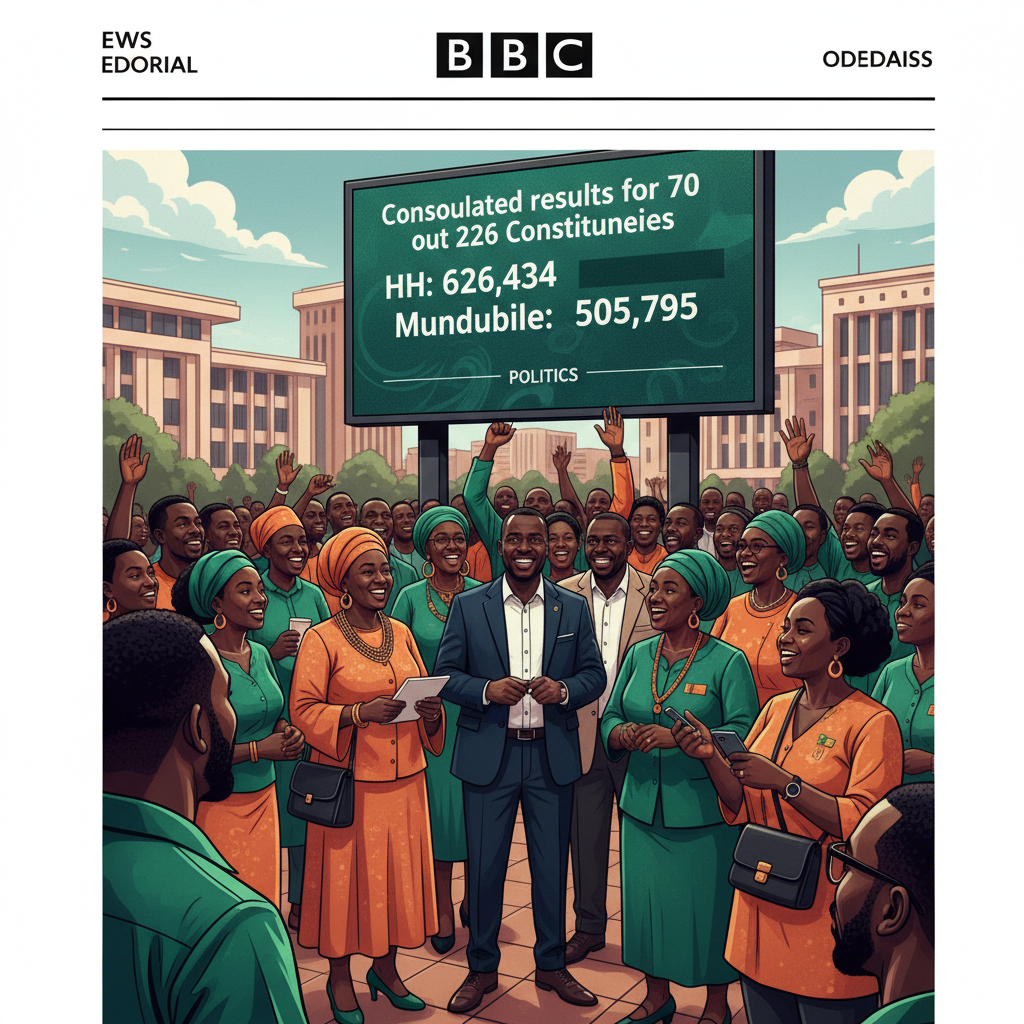
The political landscape of Zambia remains tense yet engaged as the Electoral Commission of Zambia (ECZ) releases progressive presidential election updates. With results from 70 out of the newly expanded 226 constituencies now officially consolidated and verified, incumbent President Hakainde Hichilema maintains a notable advantage over opposition leader Brian Mundubile of the National Reconciliation Party for Unity and Prosperity (NRPUP). Current figures indicate that President Hichilema has polled 626,434 votes, while Mr. Mundubile trails closely with 505,795 votes, reflecting a competitive margin that underscores a deeply polarized electorate across urban and rural strongholds. The early tallies illustrate a regional divide characteristic of Zambian electoral patterns. President Hichilema has continued to command substantial margins in his traditional southern and western bases, alongside competitive showings in urban sectors of Lusaka and parts of Central Province. Conversely, Mr. Mundubile has demonstrated formidable strength across northern, luapula, muchinga, and eastern provinces, securing vital constituency wins that keep the race fiercely contested. Political analysts note that the newly revised constituency framework, expanding seats from the historical 156 to 226, has added dynamic shifts to how votes aggregate nationally. Despite the progressive updates, tension surrounds the national tallying center as party agents and independent monitors scrutinize every batch of constituency results. The threshold for an outright victory requires a candidate to secure more than 50 percent of the valid votes cast, meaning every remaining district is critical. Campaign teams from both sides have urged their supporters to maintain calm and patience as the ECZ works through verification procedures to ensure transparency and credibility in the final outcome. The macroeconomic backdrop of these elections has heavily influenced voter turnout and campaign discourse. While