COPPERBELT RESIDENTS: “NINSHI MUFWAYA?” — MASHEKE AKASHAMBATWA
POLITICSBy Zambian Observer — Zambian Observer
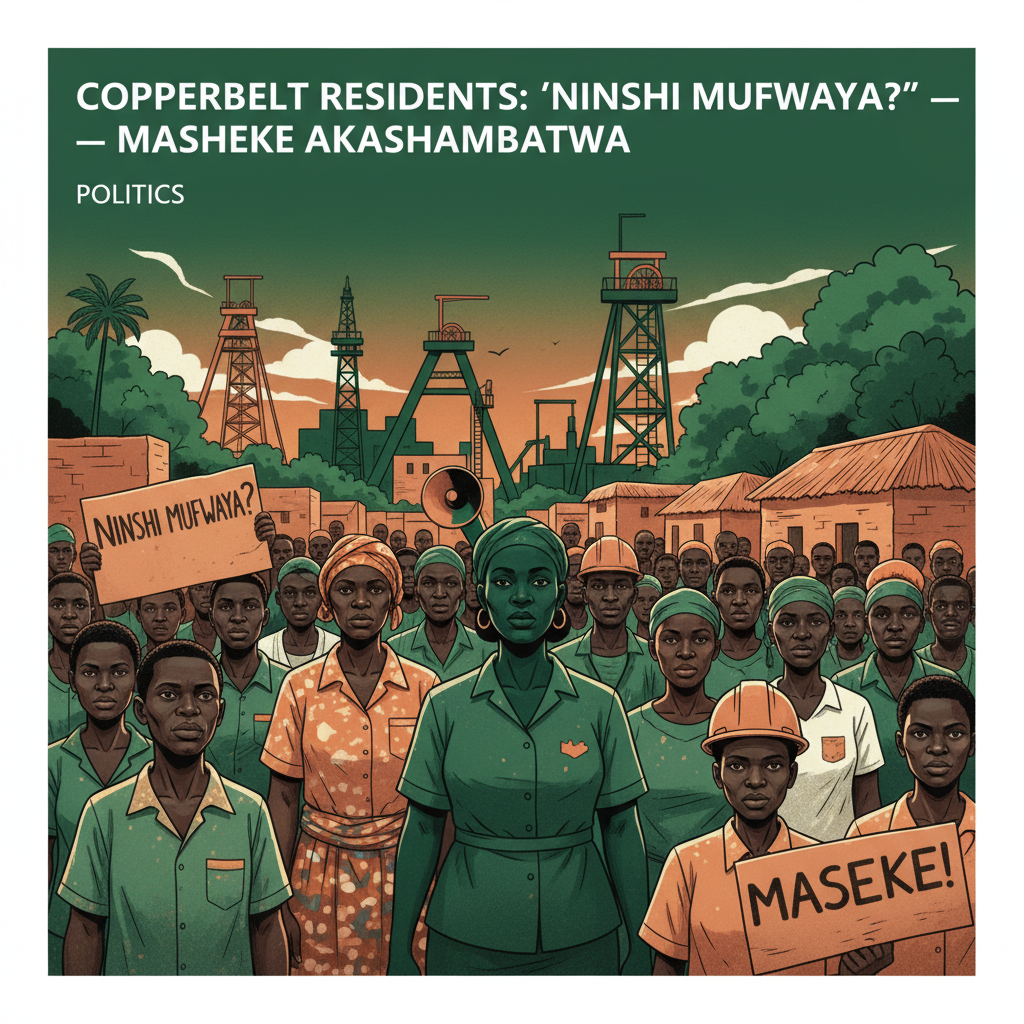
The political landscape of the Copperbelt Province has been stirred following remarks by United Party for National Development (UPND) member Masheke Akashambatwa, who openly challenged local residents over their expectations from the central government. Taking to public forums, Akashambatwa pointed to major economic interventions implemented by the new dawn administration, specifically citing the reopening of Mopani Copper Mines (MCM) in Mufulira and Konkola Copper Mines (KCM), alongside upcoming operations at Shaft 28 and the establishment of the Mingomba mine. His provocative query, "Ba Copperbelt finshi mufwaya?"—asking what more the electorate desires—has since generated widespread discourse across the region. Akashambatwa’s comments underline a growing frustration within ruling party circles regarding the political and economic sentiment in industrial heartlands. For decades, the Copperbelt has served as the lifeblood of Zambia’s national economy, heavily dependent on the mining sector for employment, commercial activity, and municipal viability. The previous closure of key mining assets under prior administrations left deep economic scars, mass unemployment, and widespread social distress. By emphasizing that the current administration successfully revived these critical assets, the UPND camp argues that substantial strides have been made to restore dignity and economic vitality to the province. However, the reaction from Copperbelt residents and political commentators highlights a complex and often fractured relationship between the electorate and political elites. Critics and ordinary citizens argue that while the reopening of major mines is a commendable milestone, the trickle-down effects on employment, local contracting, and everyday livelihoods remain uneven. Many young people continue to grapple with limited formal job opportunities, high living costs, and socio-economic pressures that extend far beyond large-scale industrial metrics. For these reside