WATCH LIVE: PRESIDENT-ELECT HAKAINDE HICHILEMA ADDRESSES THE NATION
POLITICSBy Zambian Observer — Zambian Observer
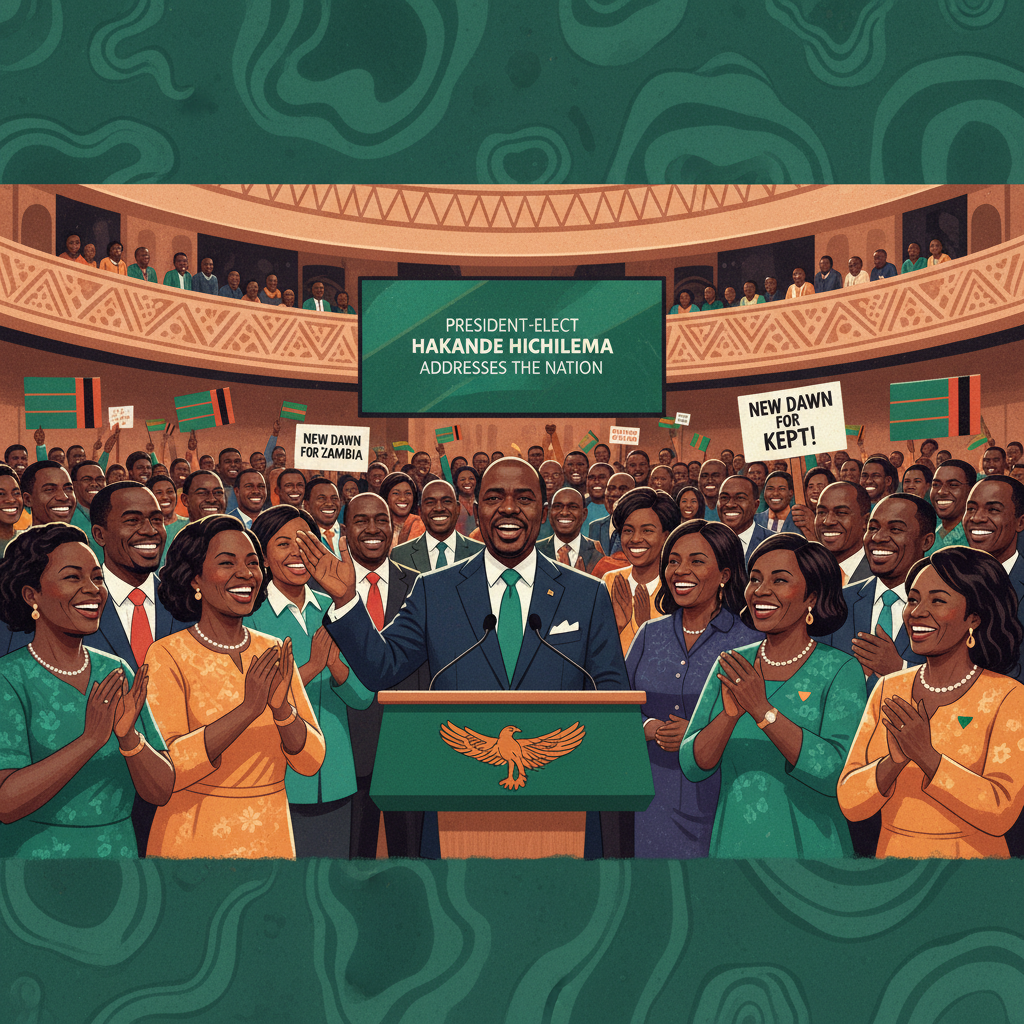
In a momentous address following the conclusion of the general elections, President Hakainde Hichilema called upon the Zambian citizenry to embrace unity, peace, and mutual respect. Standing before the nation, the Head of State underscored that the democratic exercise was a collective victory for the Republic rather than a zero-sum game between political adversaries. His message resonated deeply across the political divide, setting a tone of reconciliation as the country transitions into a new governance phase. President Hichilema specifically addressed supporters and opponents alike, stressing that those who cast their ballots differently are fellow citizens rather than enemies. In a polity historically tested by fierce political competition, this conciliatory rhetoric marks a crucial step toward healing electoral fractures. The President urged all stakeholders to channel their energy into national development, economic recovery, and strengthening democratic institutions that safeguard the interests of every Zambian, regardless of political affiliation. The aftermath of the elections brings to light critical socio-economic tasks awaiting the administration. With citizens harboring high expectations regarding job creation, cost of living adjustments, and prudent management of national resources, the government faces immense pressure to deliver tangible dividends of democracy. Observers note that maintaining social harmony will be paramount as the executive branch seeks legislative cooperation and broad-based public support for its reform agenda. Civil society organizations and international observers have largely commended the peaceful conduct of the populace during the electoral cycle. As Zambia continues to cement its reputation as a beacon of stable democracy in the region, the emphasis on peaceful coexistence reinforces the country's democratic maturity. The administration's ability to translate this rhetoric of unity into inclusive governance will shape the