ECZ’S CONDUCT OF THE 2026 GENERAL ELECTIONS BEING QUESTIONED BY UPND THROUGH NATIONWIDE ELECTION PETITIONS- Prof. Proud Moonga, PhD
POLITICSBy Prof. Proud Moonga, PhD
Source: The Zambian Observer
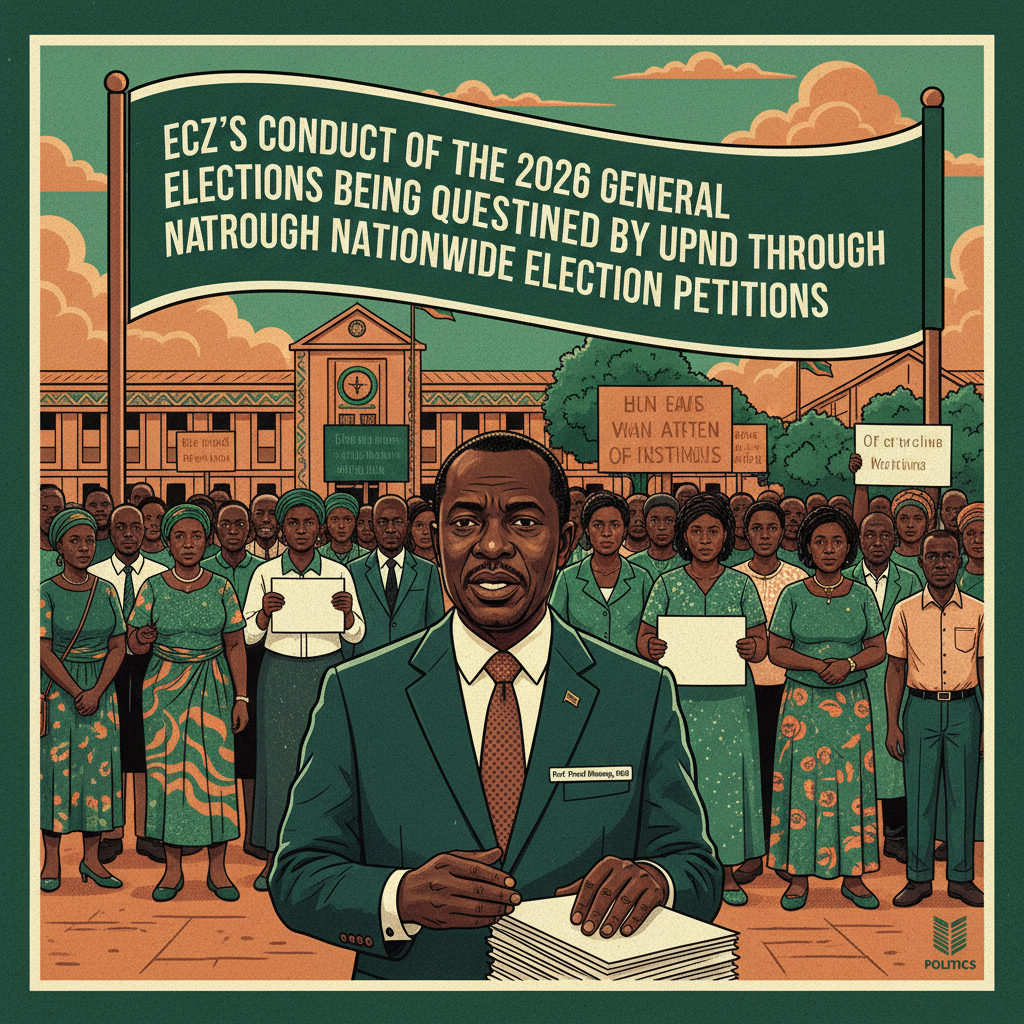
The political landscape in Zambia ahead of the August 2026 general elections has taken an intriguing turn following commentary surrounding the electoral framework and institutional conduct. Observers and good governance advocates have focused heavily on the unfolding dynamics between political stakeholders and the Electoral Commission of Zambia (ECZ). As the electoral body scales up its operational preparations—including mass voter registration drives and logistical timelines—questions surrounding administrative transparency continue to dominate public discourse. Political commentators, including academic voices from the diaspora, have pointed to unusual strategic maneuvers within the political sphere. Notably, discussions have centered on how major political actors navigate institutional accountability and electoral oversight. The involvement of various parties in legal and administrative contestations highlights a deeply competitive environment where every step of the electoral roadmap faces rigorous scrutiny from both the opposition and ruling factions alike. At the heart of these discussions is the delicate balance required to maintain public trust in independent state institutions. The ECZ, tasked with delivering a credible poll for millions of registered Zambians, remains under pressure to ensure that its administrative frameworks withstand legal and political challenges. Stakeholders across civil society and academia continue to emphasize that institutional independence and adherence to constitutional provisions are paramount to safeguarding Zambia's democratic credentials. As the country edges closer to nomination periods and the ultimate showdown at the polls, political parties are recalibrating their strategies. The interplay between legal petitions, administrative readiness, and public messaging sets the stage for a highly contested electoral cycle. Observers note that the manner in which these grievances are addressed will significantly shape the cred