Teacher janet’s coffin reportedly refused burial until questions over her death were addressed
INSTITUTIONSBy ZPP Newsroom
Source: Zambian Observer
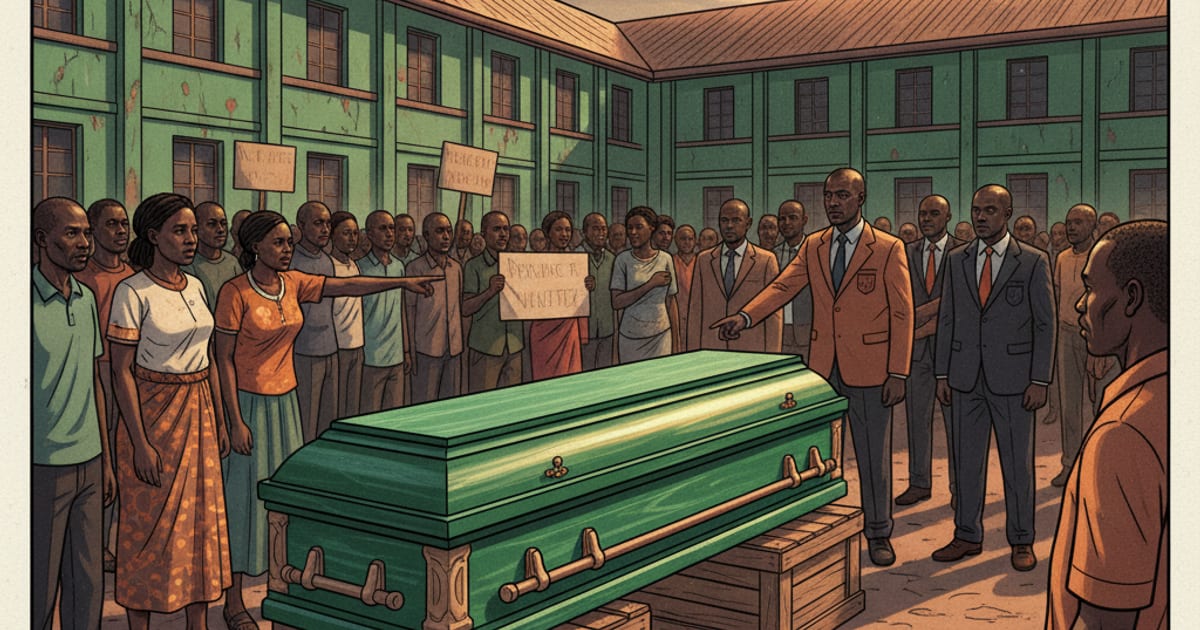
A sombre and tense atmosphere gripped the 10 Miles community on the outskirts of Lusaka this week following extraordinary scenes surrounding the funeral of a primary school teacher fondly referred to by locals as Teacher Janet. The educator reportedly passed away late last week after brief complaints of severe leg pain, triggering profound shock and grief among her pupils, colleagues, and neighbours. However, what was expected to be a standard final send-off quickly transformed into a scene of volatile public confrontation as questions mounted over the suddenness of her demise. According to community sources, tensions reached a boiling point ahead of the scheduled burial proceedings, with pallbearers and grieving residents refusing to move forward with the interment. Traditional beliefs and heightened local anxieties frequently intersect during sudden deaths in peri-urban settlements, leading to chaotic scenes where crowds demand immediate clarity and accountability from family members. In this instance, an elderly relative found himself at the center of intense public scrutiny as community members voiced deep-seated suspicions regarding the cause of the teacher's sudden death. Law enforcement agencies were swiftly called to the scene to restore public order as the gathering threatened to spiral out of control. Zambian police details faced a hostile and grief-stricken crowd determined to stall the burial until formal explanations were provided. Incidents of this nature highlight the persistent friction between modern legal and medical frameworks governing sudden deaths and deeply ingrained cultural anxieties surrounding alleged foul play or metaphysical suspicions within local communities. Community leaders and civic authorities have since stepped in to urge calm, reminding residents of the importance of allowing due process and formal medical investigations to determine the true cause of death. Post-mortem examinations and police inquiries remain the established