ZAMBIA POLICE STATEMENT: TIKTOK CONTENT CREATOR APPREHENDED OVER HATE SPEECH, INCITEMENT AND THREATS
INSTITUTIONSBy ZPP Newsroom
Source: Zambian Observer
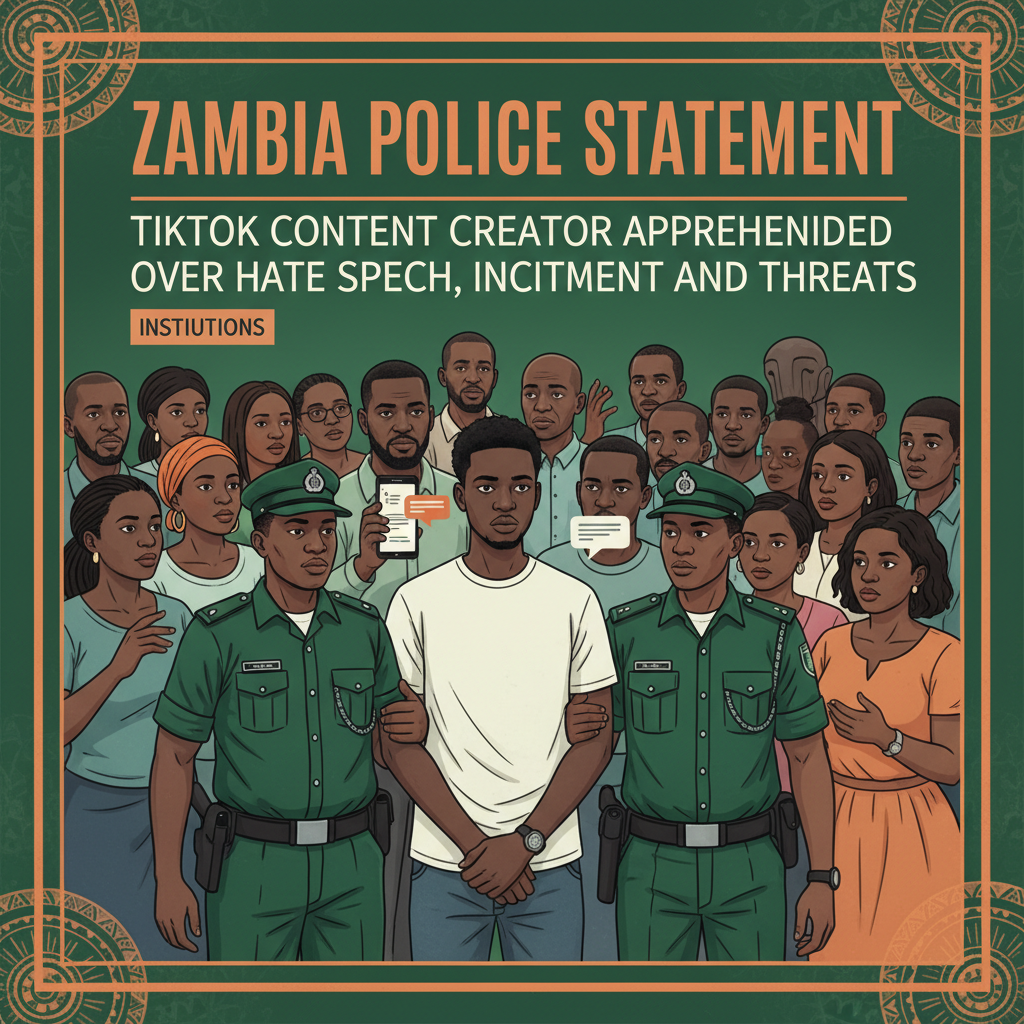
The Zambia Police Service has intensified its crackdown on digital misconduct with the apprehension of 44-year-old social media content creator Misheck Mulubwa, widely known online by his TikTok handle “BROTHERMAN” or “Kabongokitungu”. According to an official police statement issued by Assistant Public Relations Officer Timothy Malumo, Mulubwa was tracked down and arrested at the strategic Kasumbalesa Border Post in Chililabombwe District, Copperbelt Province, as he allegedly attempted to evade authorities. Investigators state that the arrest stems from a series of provocative video clips circulated across TikTok and other social media networks between June and September 2026. In these recordings, the suspect reportedly utilized abusive language, advanced tribal divisions, and openly incited civil unrest against the state. Furthermore, security wings revealed that the content included grave threats directed at high-ranking public figures, encompassing the Republican President, the Zambia Army Commander, and the Chairperson of the Electoral Commission of Zambia. The operation was executed by a multi-agency security task force comprising the Zambia Police Service, the Zambia Cyber Security Agency, and the Department of Immigration. Authorities successfully recovered an Infinix mobile device believed to have been the primary tool utilized to administer the TikTok account and broadcast the incendiary material. The device has been formally seized under Section 121 of the Criminal Procedure Code as cyber-forensic examinations continue to map out the extent of the network involved. This high-profile arrest highlights the growing regulatory and enforcement scrutiny facing digital spaces in Zambia, particularly under the framework of the updated cyber security legislation. Law enforcement agencies have repeatedly emphasized that fundamental freedoms of expression do not extend to hate speech, tribalism, or threats against national leaders and institutions. As digital pla