Copper rods now exported from Jiangxi zone in Chibombo, with a second production line planned
BUSINESSBy ZPP Newsroom
Source: Lusaka Times
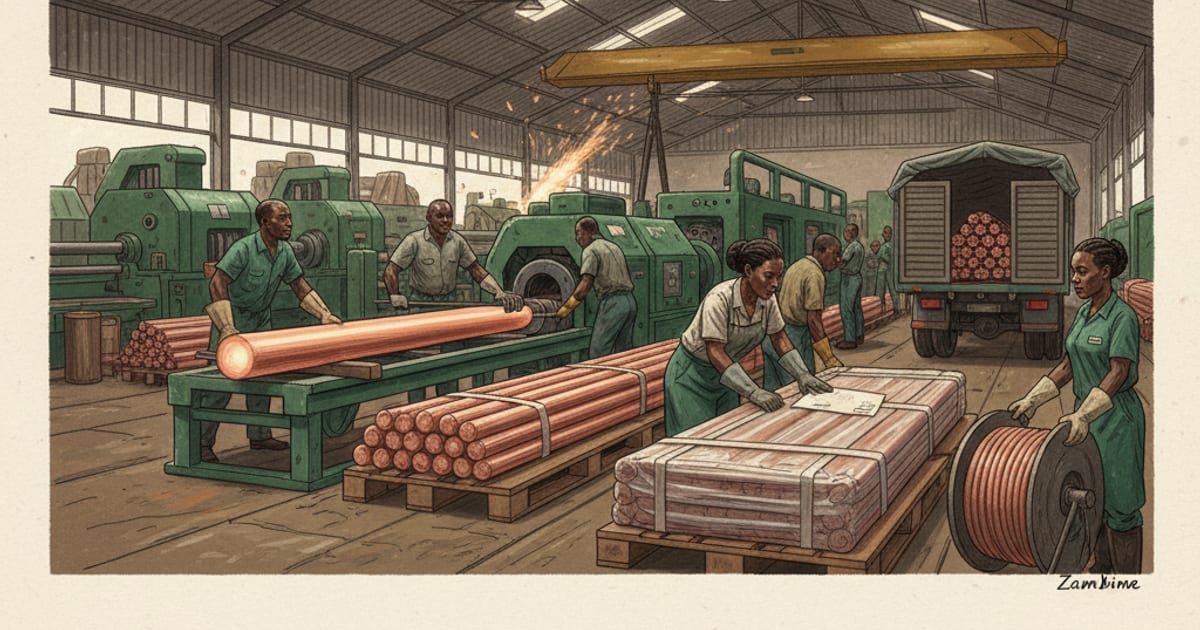
Zambia is exporting copper rods and selling copper cables and wires, all made from locally mined copper, at the Jiangxi Multi-Facility Economic Zone in Chibombo District, Central Province, according to Ministry of Information and Media Director Spokesperson Henry Kapata. He announced the progress at a media briefing in Lusaka. The rods are exported to neighbouring countries, while the cables and wires are sold to mining and construction companies at home. Jiangxi Copper Zambia, the firm making them, employs about 93 local workers, and its Deputy General Manager, Cooper Zeng, said the company has sold about US$700,000 worth of cable in Zambia, though the period was not given. The company plans a second copper production line that could produce about 1,000 tonnes a month. "This is a planned expansion, not its current production capacity," Mr Zeng said. Mr Kapata said the zone is "still in the early stages of production and industrial growth." The zone, in Kembe East Constituency, was commissioned by President Hichilema on 13 October 2023. Other firms there include Zamtrans Electrical, which makes and assembles transformers, and investors linked to Xiamen Better Technology Group, which are working on vehicle batteries, solar storage batteries and battery recycling. Mr Kapata tied the activity to the Grow Zambia Agenda, which focuses on copper production, energy expansion, industrialisation and job creation, and to the government's target of 3 million tonnes of copper a year by 2031. ## Why it matters Much of Zambia's copper leaves the country as concentrate or cathode, so the value added in making rods, cables and transformers is earned elsewhere. Making them in Chibombo keeps some of that work, and some of the wages, at home. Ninety-three jobs is a small number set against the many Zambians without work, so the test will be whether the second line and the battery and transformer plants are built and hire local people. ## What happens next The second production l