LIVE
πŸ”΄ POLITICS: Zambia heads to the polls β€” August 2026 General ElectionπŸ“Š ECONOMY: Zambian Kwacha β€” latest exchange rates and market updatesπŸ›οΈ INSTITUTIONS: ECZ announces 70 new constituencies for 2026 elections
The Zambian People's Pulse

THE ZAMBIAN
PEOPLE'S PULSE

POLITICS60% Verified

ECZ defends requirement for adoption certificates to be signed by SG, president

β€’POLITICS
β€’
β€’

Editorial Analysis

The Electoral Commission of Zambia's steadfast defence of its requirement for candidate adoption certificates to be signed by both the party Secretary General and President highlights a critical juncture in the nation's electoral governance. While the ECZ likely views this as a measure to enhance accountability and prevent electoral fraud, ensuring only legitimate party-endorsed candidates participate, it simultaneously raises significant questions about internal party democracy and accessibility for aspiring politicians. This policy, ostensibly designed for order, could inadvertently become a tool for centralising power within party structures. "The Contrast": The government narrative, often echoed by the ECZ, would likely frame this requirement as a necessary safeguard for electoral integrity, preventing rogue candidacies and ensuring transparency in party endorsements. They would emphasize the importance of clear party structures and adherence to established rules. However, independent media and opposition voices might portray this as an unnecessary bureaucratic hurdle, potentially designed to entrench the power of party elites and stifle dissent or grassroots movements. They would highlight the practical difficulties and the potential for abuse, where party presidents and SGs could arbitrarily deny adoption to popular candidates. "Voice of the People": On social media, sentiment would likely be divided. Supporters of the ECZ's stance might view it as a sensible measure to prevent chaos and ensure credible candidates. However, a significant portion of the public, especially those disillusioned with political gatekeeping, would likely express frustration. Comments might range from concerns about 'dictatorship within parties' to calls for more inclusive and transparent candidate selection processes. There would be discussions about whether such a rule genuinely serves democracy or merely strengthens the hand of a few powerful individuals, potentially limiting the choices available to the Zambian electorate.

Share this article

Listen to Story

Click play to have this article read aloud

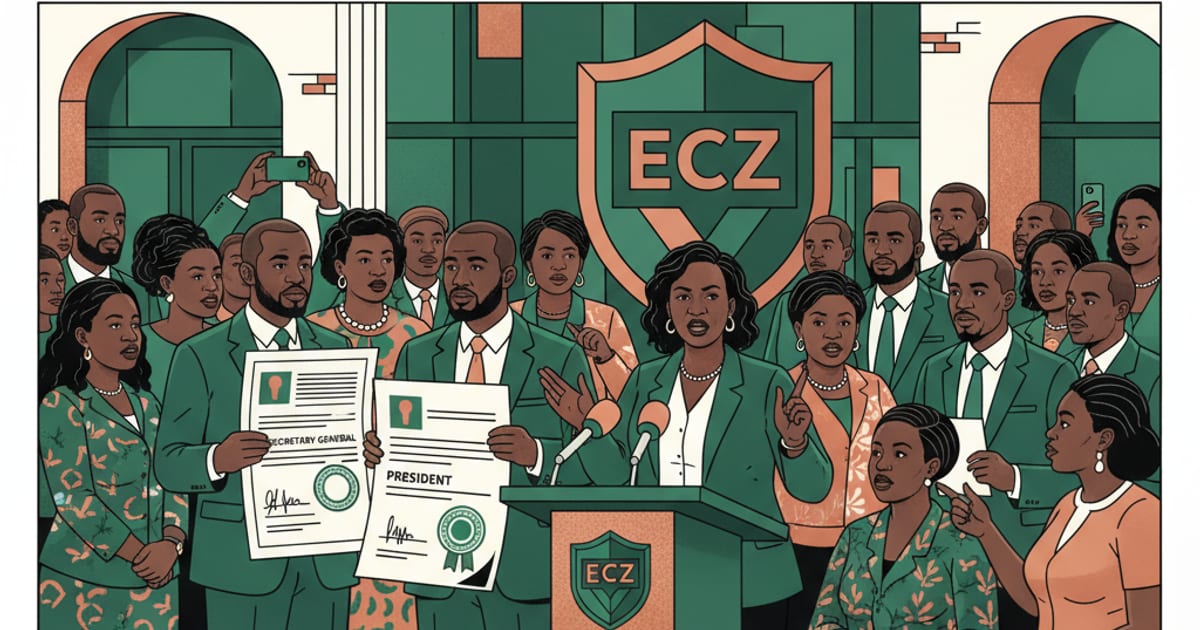
ECZ defends requirement for adoption certificates to be signed by SG, president

The Electoral Commission of Zambia (ECZ) has reportedly defended its requirement for adoption certificates, crucial for aspiring political candidates, to be signed by both the Secretary General and the President of a political party. This stance comes amidst concerns from various political stakeholders regarding the potential for gatekeeping and disenfranchisement of candidates, particularly during by-elections or general elections.

The Electoral Commission of Zambia (ECZ) has reiterated its position on the stringent requirements for candidate adoption certificates, firmly defending the necessity for these vital documents to bear the signatures of both the Secretary General and the President of a political party. This clarification from the ECZ aims to address ongoing debates and concerns raised by various political entities and civil society organisations regarding the administrative hurdles faced by aspiring candidates.

The ECZ's defence of this policy underscores its commitment to ensuring that only genuinely endorsed candidates from registered political parties are allowed to contest elections. According to the Commission, this dual-signature requirement serves as a critical safeguard against internal party disputes and the submission of fraudulent or unauthorised candidacies. It provides a clear chain of command and accountability within political structures, thereby streamlining the electoral process and minimising potential legal challenges arising from disputed adoptions.

However, this directive has not been without its critics. Several smaller political parties and independent observers have voiced apprehension, suggesting that such a requirement could inadvertently empower party leadership to exert undue influence or even suppress internal democracy. There are fears that this could be used as a tool for gatekeeping, potentially excluding popular candidates who may not be in favour with the top echelons of their respective parties. This concern is particularly pertinent in Zambia's vibrant multi-party democracy, where internal party dynamics often play a significant role in candidate selection.

Furthermore, the logistical implications of securing two high-level signatures, especially during tight nomination schedules for by-elections, have been highlighted as a practical challenge. Parties with decentralised structures or those experiencing leadership transitions might find it arduous to comply promptly, potentially leading to the disqualification of otherwise eligible candidates. Critics argue that a single, verifiable signature from an authorised party official, perhaps the Secretary General, should suffice, provided the party's constitution clearly delineates such powers.

The ECZ, as the impartial arbiter of Zambia's electoral landscape, maintains that its regulations are designed to uphold the integrity of the electoral process and not to interfere with internal party affairs. The Commission's spokesperson, while not explicitly quoted in the available information, is understood to have emphasised that these rules are applied uniformly across all political parties to ensure fairness and transparency. The ongoing dialogue between the ECZ and political stakeholders is crucial to finding a balance between robust electoral safeguards and facilitating broader participation in the democratic process.

As Zambia approaches future electoral cycles, the debate surrounding candidate adoption certificates is likely to persist. The ECZ's continued engagement with political parties, civil society, and legal experts will be essential in refining these regulations to ensure they serve the best interests of Zambian democracy, promoting both order and inclusivity in the nation's political contests.

Topics

Stay informed β€” join our WhatsApp Channel

Get breaking Zambian news, political analysis, and daily briefings from The Zambian People's Pulse β€” straight to your WhatsApp.

Join our WhatsApp Channel

Related Articles

Former UPND MP Garry Nkombo says he has been sidelined, considers independent run
POLITICS

Former UPND MP Garry Nkombo says he has been sidelined, considers independent run

Former Mazabuka Central Member of Parliament, Garry Nkombo, a prominent figure within the United Party for National Development (UPND), has expressed profound disillusionment, stating he feels 'thrown to the dumpsite' by his party colleagues. This sentiment has led him to publicly consider running as an independent candidate in the upcoming August 13 general election, signaling potential internal rifts within the opposition party ahead of a crucial national poll.

ECZ extends nomination period for National Assembly, mayoral races
POLITICS

ECZ extends nomination period for National Assembly, mayoral races

The Electoral Commission of Zambia (ECZ) has announced an extension for the nomination period for National Assembly, mayoral, and council chairperson elections. This decision follows numerous reports from prospective candidates who cited the loss of their voter cards as a significant impediment to completing the nomination process. The extension aims to ensure all eligible candidates have an opportunity to participate, reflecting the ECZ's commitment to inclusive democratic processes.

Violence reported at Mumbwa Town Council over UPND candidate dispute
POLITICS

Violence reported at Mumbwa Town Council over UPND candidate dispute

Violence erupted at Mumbwa Town Council as two United Party for National Development (UPND) candidates controversially attempted to file nominations for the Mumbwa Central ward by-election. The dispute reportedly stemmed from conflicting adoption certificates, leading to clashes among party supporters. This incident highlights the intense competition and internal divisions within political parties, even at the local government level in Zambia.

Reader Comments

Share Your Thoughts

No comments yet. Be the first to share your thoughts!