Chibamba says Government needs over US$100 million for a one-million-hectare forestry plan along the Lobito Corridor, with work due in January 2027
ENVIRONMENTBy ZPP Newsroom
Source: News Diggers
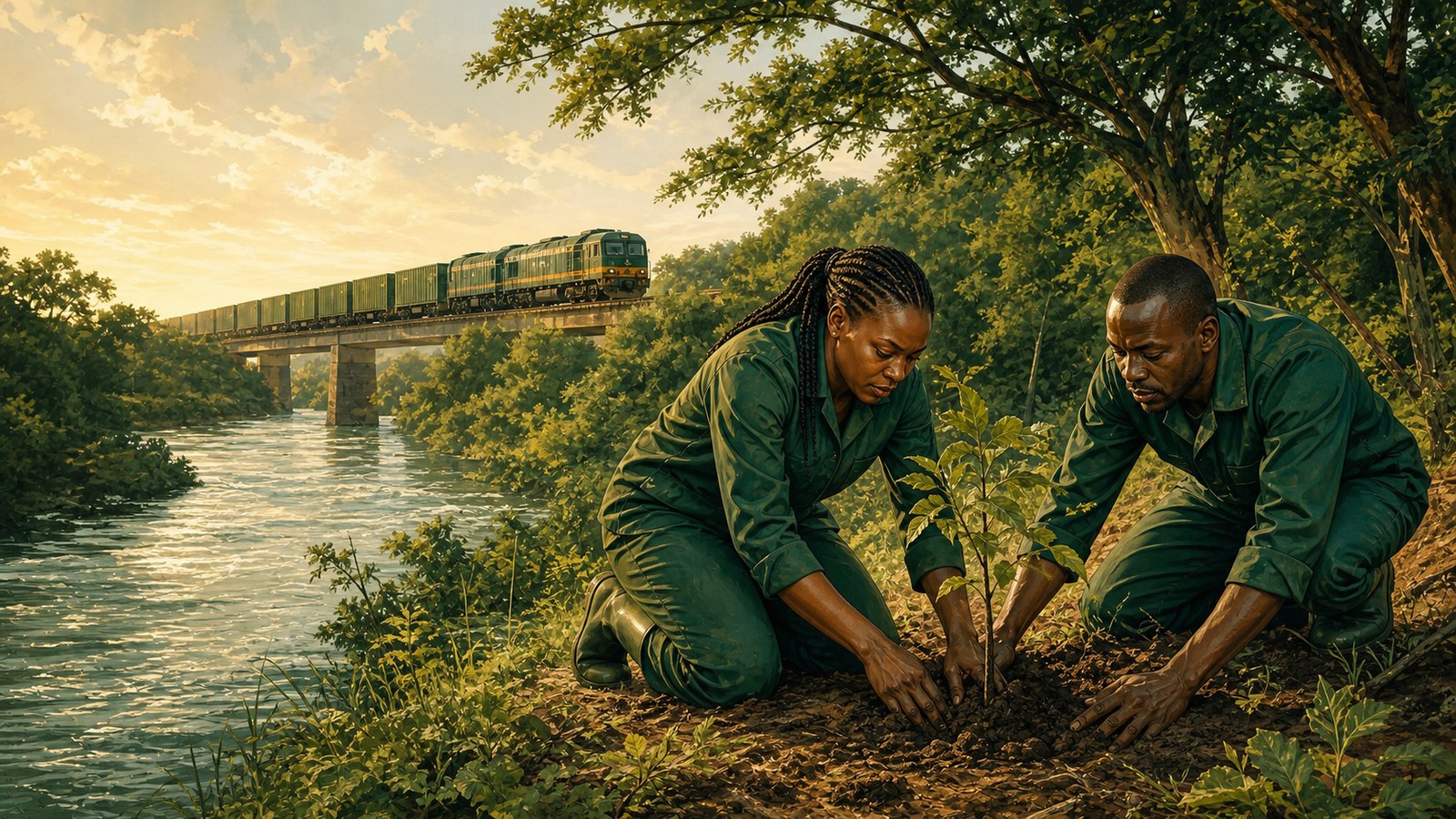
The Government says it needs more than US$100 million for a one-million-hectare forestry project along the Lobito Corridor, developed with the World Bank. Permanent Secretary Douty Chibamba of the Ministry of Green Economy and Environment says preliminary activities are expected to start in January 2027. Mr Chibamba gave the figures during a visit to the Zambia Forestry and Forest Industries Corporation's (ZAFFICO) forestry and timber-processing operations in Ndola. He said the project is meant to create jobs, raise local timber production and add value in the forestry sector, and that rural communities along the corridor should benefit directly. ## Background In September, World Bank team leader Ambroise Brenier set out a proposed US$102 million Lobito Plantation Forest Economy Programme to Green Economy Minister Gilbert Siame in Lusaka. At that time the Bank said it was ready to start preparing the programme once the Government made a formal request. The proposal is to bring private money into commercial plantations of pine and eucalyptus, more timber processing and better access to markets. Funding would mix public and private money through three arms of the World Bank Group: the International Development Association, the International Finance Corporation and the Multilateral Investment Guarantee Agency. Mr Siame said then that he wanted measurable short-, medium- and long-term benefits, real gains for local communities, small-scale producers and outgrowers, sustainable forest management, environmental safeguards and sound land-tenure arrangements. The scale is large for Zambia. In March, ZAFFICO said it held 62,000 hectares of plantations and aimed for 100,000 hectares across five provinces within three years, with exports to Zimbabwe and Angola through the corridor. One million hectares would be ten times that target. ## Why it matters The first question for a rural family is land. Much of Zambia's rural land is held under chiefs, and a plantation of an