Scientists found ancient logs locked together, and it changed the story of early humans
INSTITUTIONSBy Team Global — The Times of India
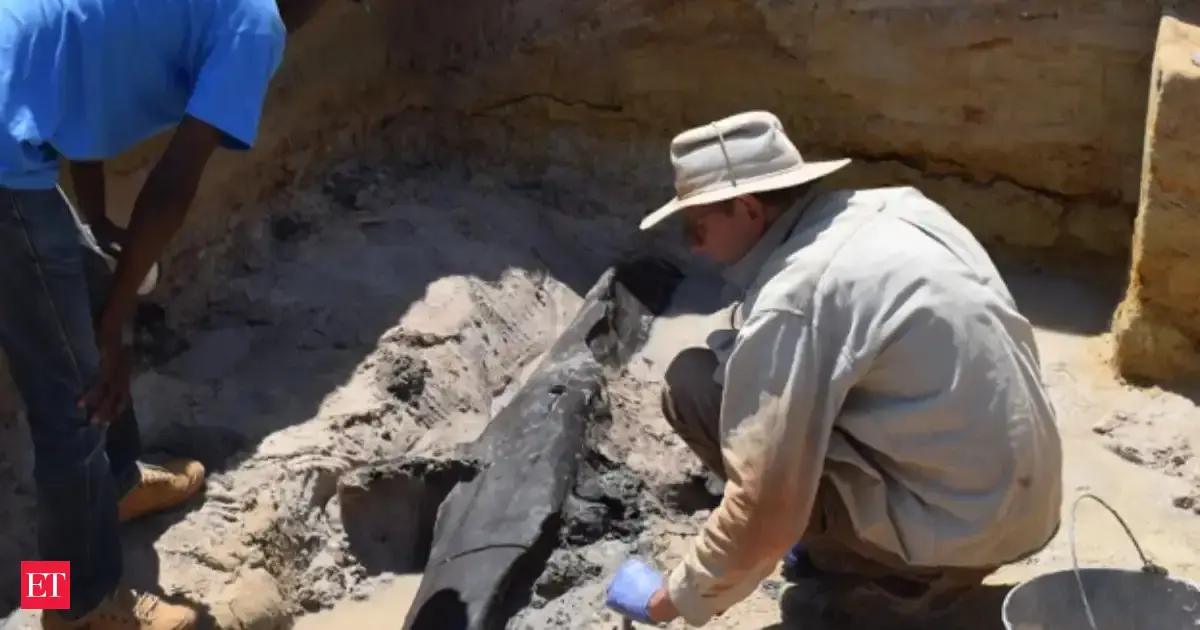
LUSAKA – A monumental archaeological discovery at Zambia's renowned Kalambo Falls is poised to fundamentally reshape our understanding of early human history and technological development. Researchers have unearthed meticulously crafted, interlocked wooden structures, remarkably preserved for nearly half a million years, pushing back the timeline for complex woodworking and construction by hundreds of thousands of years. The findings, detailed in a recent scientific publication, indicate that these ancient logs date back approximately 476,000 years. This astonishing age places their creation firmly within the Middle Pleistocene epoch, long before the generally accepted appearance of Homo sapiens. The implication is profound: early hominins, not yet anatomically modern humans, possessed the cognitive capacity and practical skills to fell trees, shape timber with stone tools, and join them to build structures, possibly for shelter, pathways, or other functional purposes that required stability and durability. The waterlogged conditions at Kalambo Falls, a site already famous for its archaeological richness, proved to be an ideal anaerobic environment, preventing the decay that would have otherwise erased such delicate organic evidence. This discovery at Kalambo Falls, a UNESCO World Heritage Tentative Site, elevates Zambia's standing as a crucible of human evolution. For decades, archaeological evidence for early hominin construction was largely limited to stone tools and bone fragments, with perishable materials like wood rarely surviving. The interlocked nature of the Kalambo Falls timbers suggests a level of foresight, planning, and collaborative effort previously attributed only to much later human populations. It implies a settled or semi-settled lifestyle, moving beyond purely nomadic existence, and the ability to manipulate the environment to create more permanent living spaces or infrastructure. The implications for Zambian heritage and tourism are immense.