XAVIER CHUNGU GRANTED K50,000 BAIL BUT REMAINS IN CUSTODY
INSTITUTIONSBy Zambian Observer — Zambian Observer
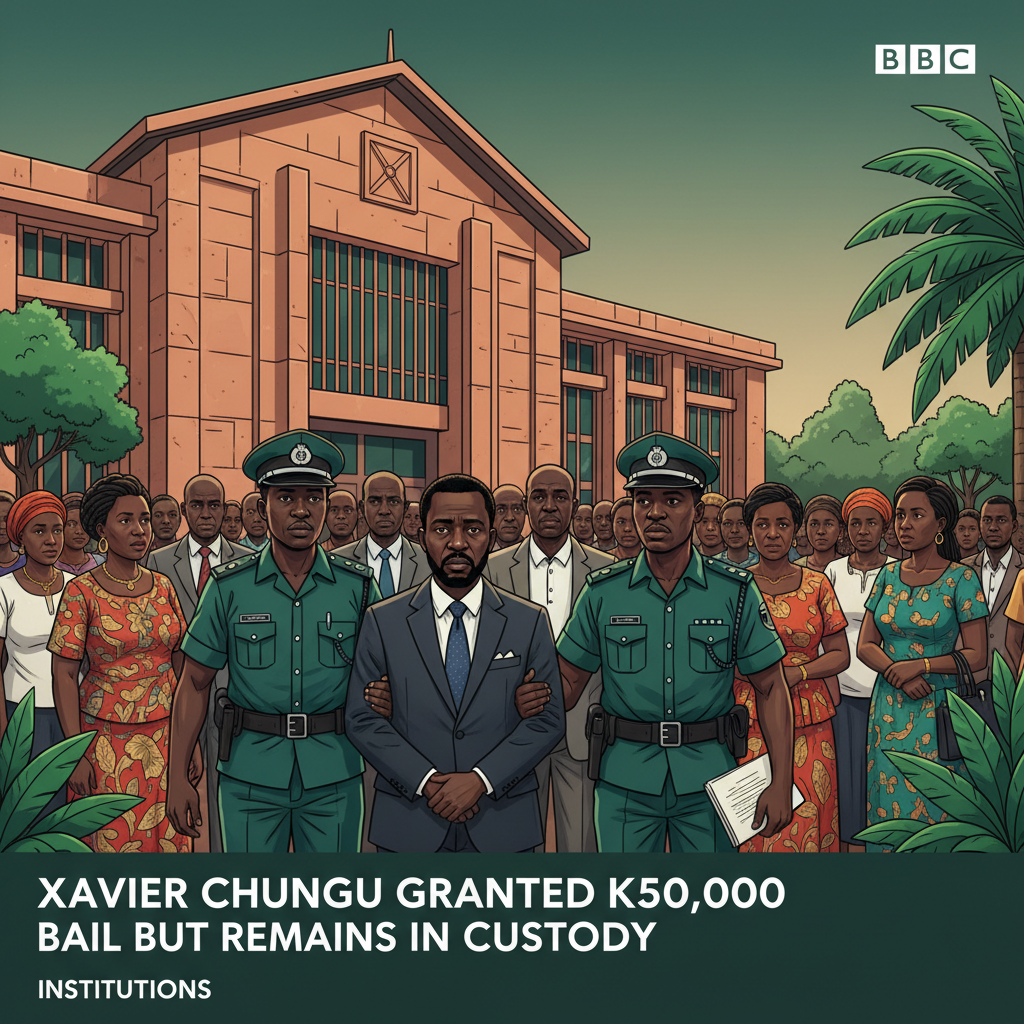
LUSAKA – Former Zambia Intelligence Service (ZIS) Director-General, Xavier Chungu, has been granted bail set at K50,000 by the Lusaka High Court, a decision that has drawn significant public attention. Despite the High Court's order, Mr. Chungu, a prominent figure from the Mwanawasa era 'corruption crusade', reportedly remains in state custody, a circumstance that has sparked debate among legal experts and the general public regarding the practical application of judicial directives in high-profile cases. The bail condition, though substantial, is a standard procedure for individuals facing charges that allow for such relief. However, the continued detention of Mr. Chungu after the High Court's ruling suggests potential administrative or additional legal hurdles that need to be clarified. This situation is not entirely unprecedented in Zambian legal history, where complex cases involving former senior government officials often encounter layers of procedural delays or additional charges that might supersede a single bail grant. Mr. Chungu's legal saga dates back to the early 2000s, when he was among several high-ranking officials targeted in the late President Levy Mwanawasa's anti-corruption drive. He faced numerous charges, including theft by public servant and abuse of authority, which led to a protracted legal battle that has spanned well over a decade. His case has often been cited as a litmus test for the country's commitment to combating corruption and ensuring accountability at the highest levels of government. The current development underscores the persistent challenges within Zambia's justice system, particularly concerning the efficiency of processing bail and the coordination between various law enforcement agencies and the judiciary. For a former intelligence chief, the implications of such a situation are profound, not only for his personal liberty but also for public perception of judicial independence and the rule of law. The public will keenly o