TESTED LEADERSHIP VS. EMPTY POLITICS: WHY PRESIDENT HICHILEMA’S PRAGMATIC REFORMS ARE TRANSFORMING ZAMBIA
POLITICSBy Zambian Observer — Zambian Observer
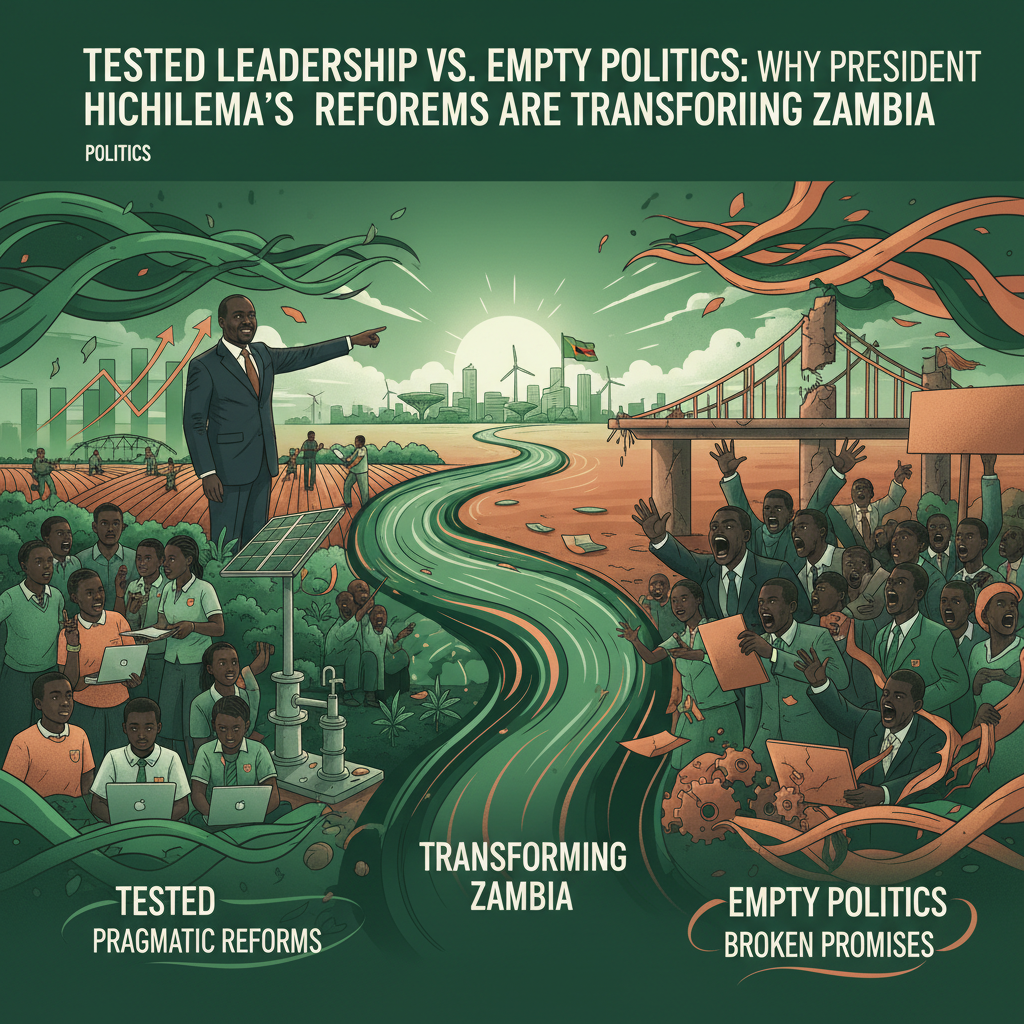
LUSAKA – President Hakainde Hichilema's administration is steering Zambia through a period of significant reform, characterized by a pragmatic approach to governance and a steadfast commitment to national development. This leadership style, often contrasted with what critics term 'empty politics,' is increasingly being recognized for its tangible impact across various sectors of the Zambian economy and society. The recent sitting of Parliament served as a powerful testament to this new direction, witnessing the passage of a substantial number of bills designed to underpin the country's economic recovery and institutional strengthening. These legislative actions are not merely procedural; they represent a concerted effort to create a more stable, predictable, and investor-friendly environment, crucial for attracting both local and foreign direct investment. Under President Hichilema’s stewardship, the focus has been squarely on economic stabilization, debt restructuring, and enhancing public service delivery. The government has prioritized fiscal discipline, aiming to restore macroeconomic stability and reduce the national debt burden that has long stifled growth. Initiatives to improve education, healthcare, and agricultural productivity are also central to this reform agenda, reflecting a holistic approach to national transformation. This pragmatic leadership is often seen as a direct response to the challenges inherited from previous administrations, which were frequently criticized for prioritizing political maneuvering over substantive policy implementation. The current government's emphasis on transparency, accountability, and the rule of law is intended to rebuild public trust and foster a culture of good governance, essential for sustainable development. While the path to full recovery and transformation remains challenging, the consistent legislative activity and the government's stated commitment to evidence-based policy-making signal a determined effor