President Hakainde Hichilema nominated unopposed as UPND presidential candidate for 2026.
POLITICSBy ZPP Newsroom
Source: Mwebantu
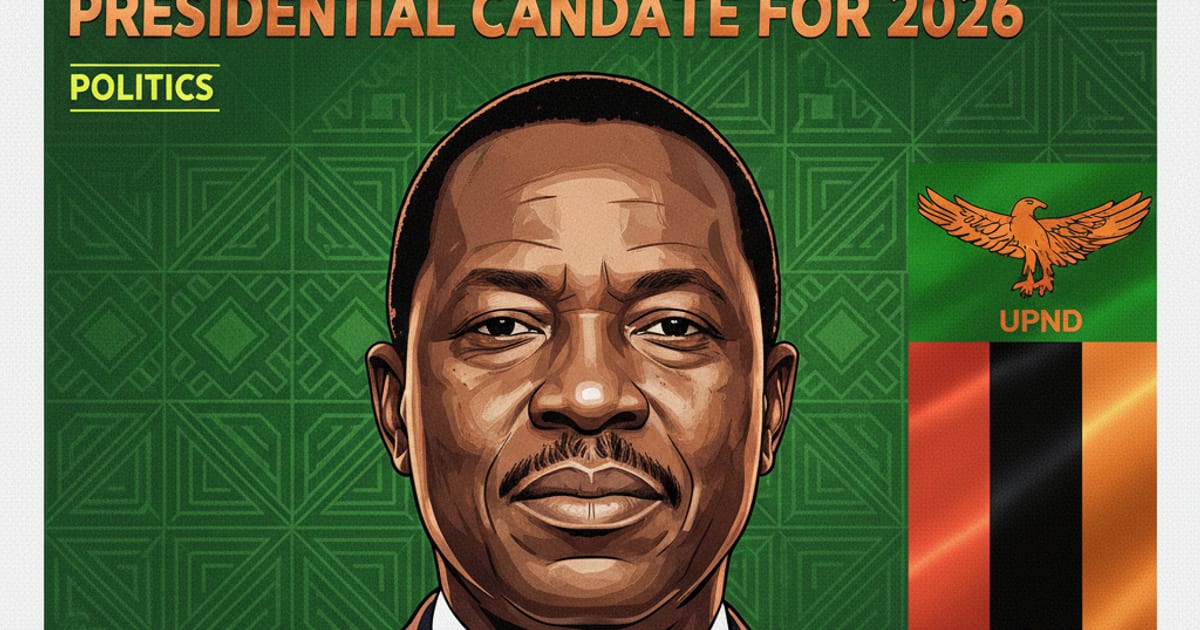
**Lusaka, Zambia** – President Hakainde Hichilema's unopposed nomination as the United Party for National Development (UPND) presidential candidate for the August 13, 2026 general election has firmly cemented his leadership within the ruling party. This significant development, confirmed by party structures, signals a clear mandate from the UPND ahead of what promises to be a keenly contested national poll. The absence of internal challengers underscores a perceived unity within the party, allowing the UPND to channel its efforts and resources towards formulating its national campaign strategy rather than expending energy on internal contests. For many within the party, this move is a strong affirmation of confidence in President Hichilema's stewardship and the trajectory he has set for both the party and the nation since assuming office. This unopposed endorsement aligns with a narrative of stability and clear direction that the government is keen to project. Party stalwarts and government officials are likely to frame this as a testament to President Hichilema’s effective governance, his commitment to economic recovery, and the cohesion within the UPND ranks. Such a presentation aims to reassure both party members and the wider electorate that the current leadership offers a steady hand for Zambia's future. The historical precedent in Zambian politics often sees dominant parties presenting a united front through such nominations, reflecting either overwhelming support for the incumbent or a tightly managed internal democratic process designed to avoid divisive contests. However, the implications of an unopposed nomination extend beyond mere party unity and warrant closer scrutiny. While it undoubtedly projects strength, independent observers and opposition parties may question the extent of internal party democracy within the UPND. The absence of alternative voices in the presidential race could be interpreted by some as stifling internal debate, potentially lim