IMF Projects Zambia Fiscal Surplus To Fall To 1.1% Of GDP In 2026 From 3.1% In 2025 With Growth At 4.3% And Inflation At 8.5%
BUSINESSBy ZambiaInvest — ZambiaInvest
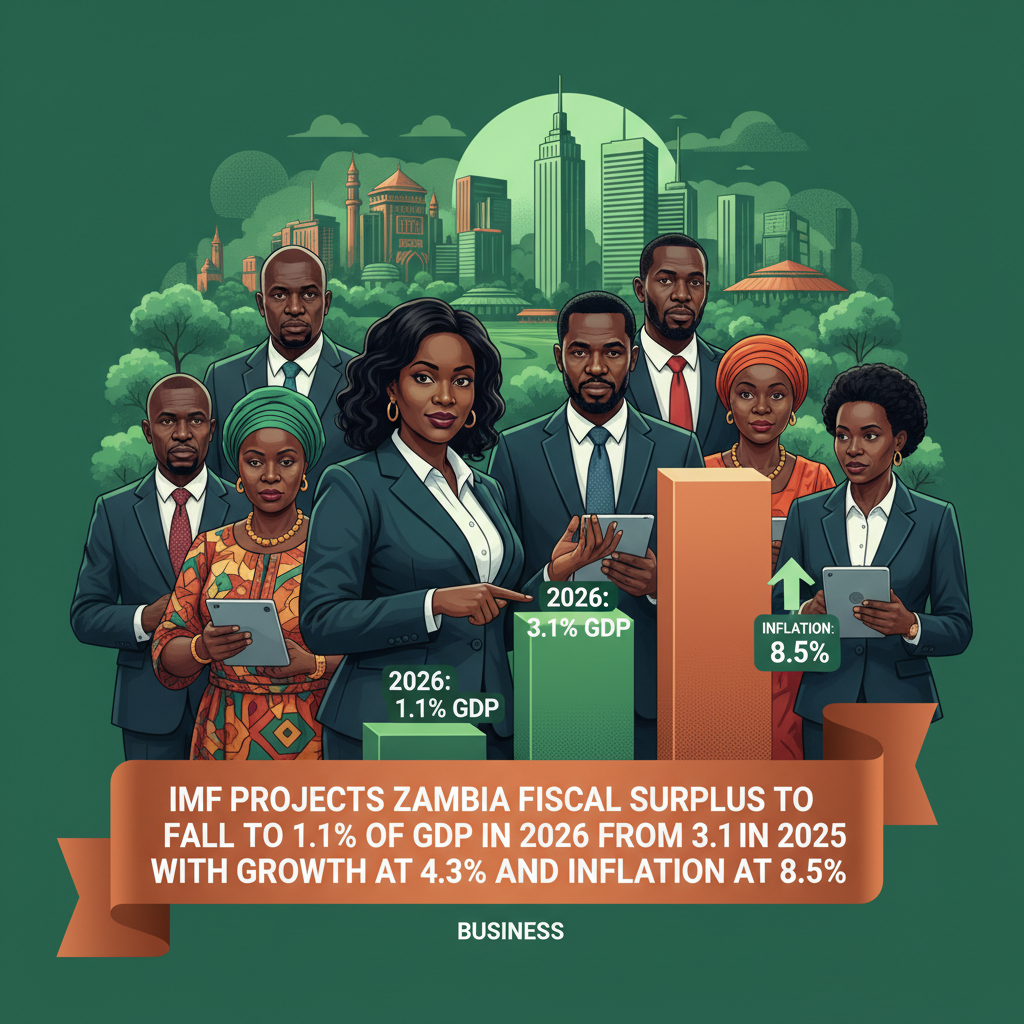
LUSAKA – The International Monetary Fund (IMF) has delivered a nuanced economic outlook for Zambia, projecting a notable contraction in the nation's fiscal surplus in the medium term, even as it forecasts steady economic growth. Following a recent staff visit to Lusaka, the global financial institution indicated that Zambia's fiscal surplus is expected to fall from an anticipated 3.1% of Gross Domestic Product (GDP) in 2025 to a more modest 1.1% in 2026. This assessment comes as the IMF concluded its review of economic developments under Zambia's recently completed Extended Credit Facility (ECF) programme. The ECF, a crucial lifeline for Zambia's economic stabilisation and debt restructuring efforts, has been instrumental in guiding the country through a period of significant fiscal adjustment. The discussions during the visit also reportedly touched upon the possibility of a successor arrangement, signalling continued engagement between Zambia and the Fund as the nation navigates its economic recovery path. Despite the projected decline in the fiscal surplus, the IMF maintains a positive outlook on Zambia's overall economic expansion, forecasting a robust GDP growth rate of 4.3%. This growth is critical for job creation and poverty reduction, particularly in a country heavily reliant on copper mining and agriculture. However, the Fund also projects inflation to remain elevated at 8.5%, a figure that could continue to impact the purchasing power of ordinary Zambians and pose challenges for the central bank's monetary policy. The anticipated reduction in the fiscal surplus underscores the ongoing fiscal pressures faced by the Zambian government. While the initial ECF programme aimed to restore macroeconomic stability and debt sustainability, the path to sustained fiscal health remains challenging. Factors such as commodity price volatility, global economic headwinds, and the need for continued public sector reforms could contribute to the narrowing of the fiscal s