Former Zambian President's Widow Wins Court Battle to Bury Him in South Africa
POLITICSBy AllAfrica Zambia — AllAfrica Zambia
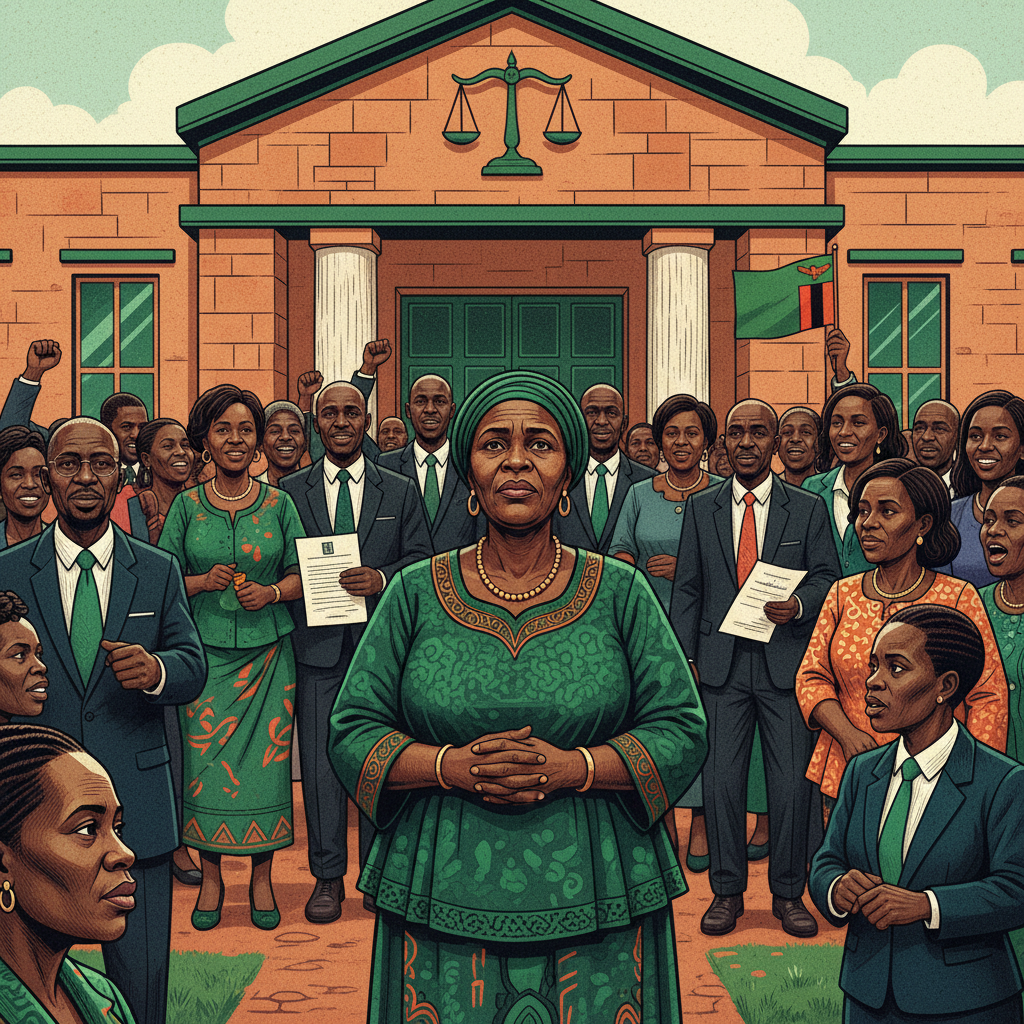
JOHANNESBURG – In a landmark legal decision with profound implications for Zambia's political and social landscape, former First Lady Esther Lungu and seven other family members have won their appeal to inter the late former Zambian president in South Africa. The Supreme Court, in a ruling delivered this week, overturned a prior judgment that had sought to compel the family to bury the deceased head of state within Zambia's borders, specifically in Lusaka. The protracted legal battle has captivated public attention both in Zambia and across the region, highlighting the complexities surrounding personal wishes, national sentiment, and legal precedent in the context of a former leader's passing. The family's insistence on a burial in Fourways Memorial Park, Johannesburg, was met with initial resistance, leading to the judicial process that has now reached its conclusion. This decision allows the family to proceed with their preferred arrangements, bringing an end to weeks of uncertainty and public speculation. The initial ruling, which the Supreme Court has now set aside, was reportedly based on arguments concerning the national significance of a former president and the perceived expectation for such a figure to be laid to rest on home soil. However, the appellate court's judgment seemingly prioritised the family's rights and the deceased's presumed wishes, or those of his closest kin, over broader nationalistic considerations. While the specifics of the Supreme Court's reasoning are yet to be fully detailed, it is understood that legal principles pertaining to personal autonomy and family discretion played a crucial role. This development is likely to elicit varied reactions across Zambia. While some may view it as a triumph for individual and family rights, others might express disappointment, believing that a former head of state should, by tradition and national honour, be interred in Zambia. The debate underscores a deeper conversation about how nations honou