NO RUNNING MATE, NO PRESIDENTIAL TICKET? A Constitutional Question for 2026
POLITICSBy Isaac Simbeye (LLM) — Zambian Observer
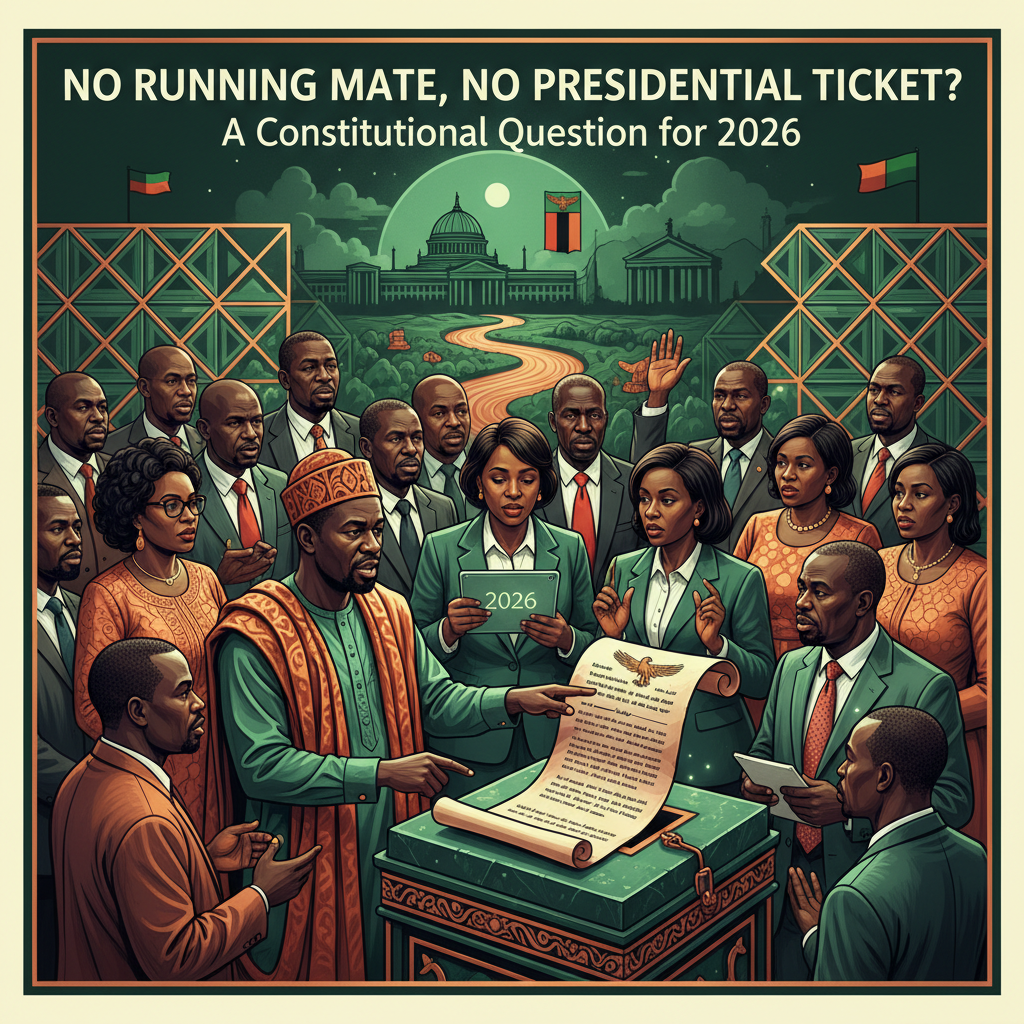
LUSAKA – As Zambia inches closer to the 2026 general elections, a significant constitutional debate has been ignited, focusing on the stringent requirements for presidential candidates, particularly concerning the nomination of a running mate. The discussion, spearheaded by legal experts, centers on Article 100(2) of the Zambian Constitution, which outlines the conditions for a valid presidential ticket. This constitutional scrutiny has been prompted by recent, often opaque, withdrawals of electoral candidates and their running mates, raising questions about the robustness and clarity of the electoral legal framework. The core of the constitutional query, as highlighted by legal scholar Isaac Simbeye (LLM), is whether a presidential aspirant can be deemed validly nominated if they present themselves without a designated running mate. Article 100(2) states, among other things, that a presidential candidate must nominate a person to be their running mate. The ambiguity arises when considering scenarios where a running mate might withdraw at a critical juncture, or if a candidate attempts to submit nomination papers without one, perhaps due to internal party wrangles or unforeseen circumstances. This situation poses a direct challenge to the Electoral Commission of Zambia (ECZ) and its interpretation of the law, potentially leading to legal battles that could disrupt the electoral calendar. Historically, Zambia's electoral landscape has been punctuated by various legal interpretations and challenges, often testing the limits of its democratic institutions. The current debate is not merely academic; it has profound practical implications for political parties and aspirants. Parties must now meticulously vet their candidates and running mates, ensuring not only their eligibility but also their commitment to seeing the process through. Any lapse could result in disqualification, a scenario that could disenfranchise voters and destabilize the political environment. The i