UPND DISMISSES TONSE CLAIMS OF BEING BLOCKED FROM PRINTING CAMPAIGN MATERIALS AT MULUNGUSHI TEXTILES
POLITICSBy Elesani Phiri — Zambian Observer
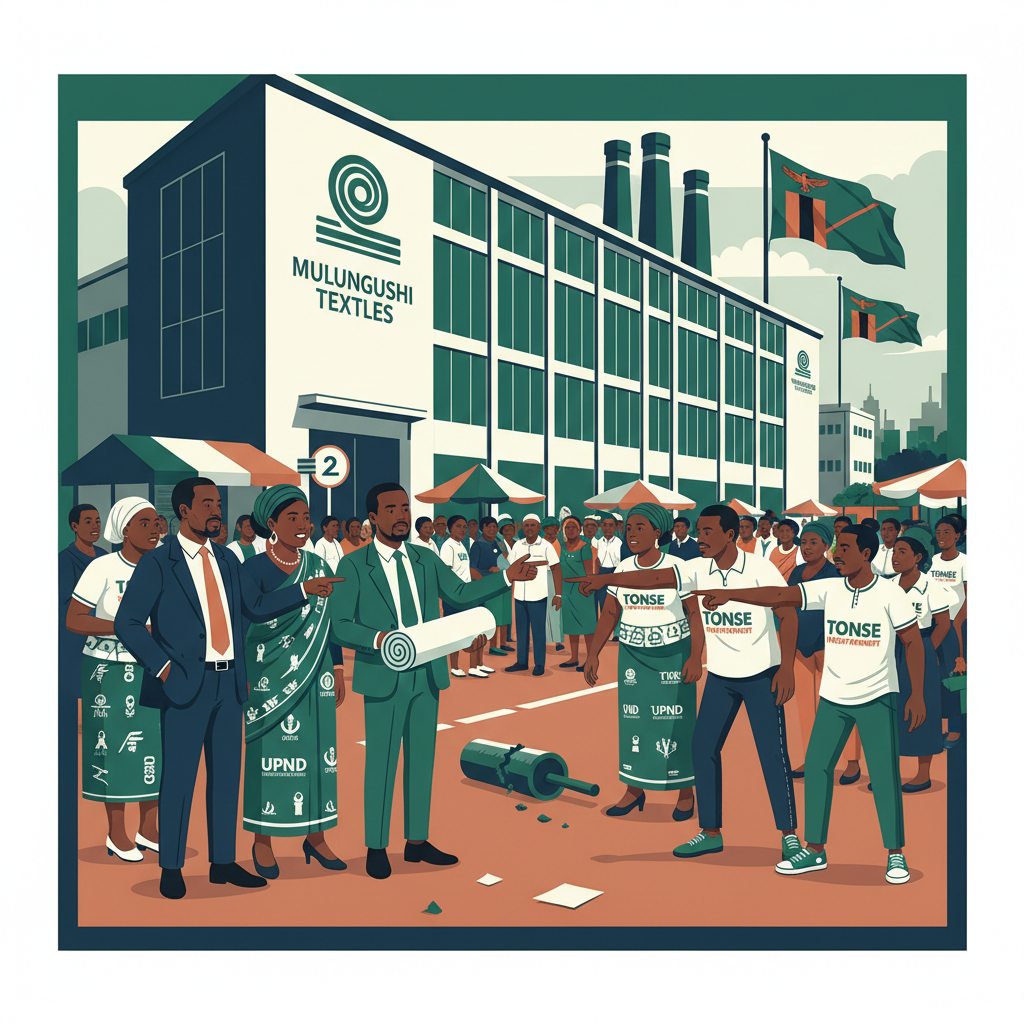
LUSAKA – The United Party for National Development (UPND) has strongly refuted accusations from the Tonse Alliance, which alleged that its members were deliberately obstructed from printing campaign materials at the government-owned Mulungushi Textiles. Likando Mufalali, the UPND National Campaign Manager, issued a direct challenge to the Tonse Alliance, demanding concrete evidence to substantiate what he termed as unfounded and politically motivated claims. Mulungushi Textiles, a parastatal company with significant printing capabilities, has historically been a key facility for various government and private sector printing needs. Its accessibility, particularly during election periods, often becomes a point of contention among political parties, with opposition factions frequently raising concerns about equitable access to state resources. Mr. Mufalali emphasized that the UPND, as the ruling party, operates on principles of fairness and would not endorse any actions that undermine democratic processes or create an uneven playing field for political competitors. “These allegations are not only false but also a desperate attempt by the Tonse Alliance to garner sympathy and create a narrative of victimisation,” Mufalali stated in a press briefing held in Lusaka. “We challenge them to produce a single piece of evidence – a formal application, a rejection letter, or any communication – that proves their claim of being blocked. Without such proof, these remain mere fabrications designed to distract the public from their own lack of substantive campaign messages.” He further stressed that Mulungushi Textiles operates as a commercial entity and any party seeking its services must follow due process, implying that perhaps the Tonse Alliance had not done so. Political analysts suggest that such disputes are a common feature of Zambian election cycles, where accusations of state resource misuse or favouritism are frequently traded between the ruling party and the oppositi