ELECT A PRESIDENT WHO WILL NOT USE CYBER LAWS TO SILENCE ZAMBIANS – Catholic Bishops
POLITICSBy ZPP Newsroom
Source: Zambian Observer
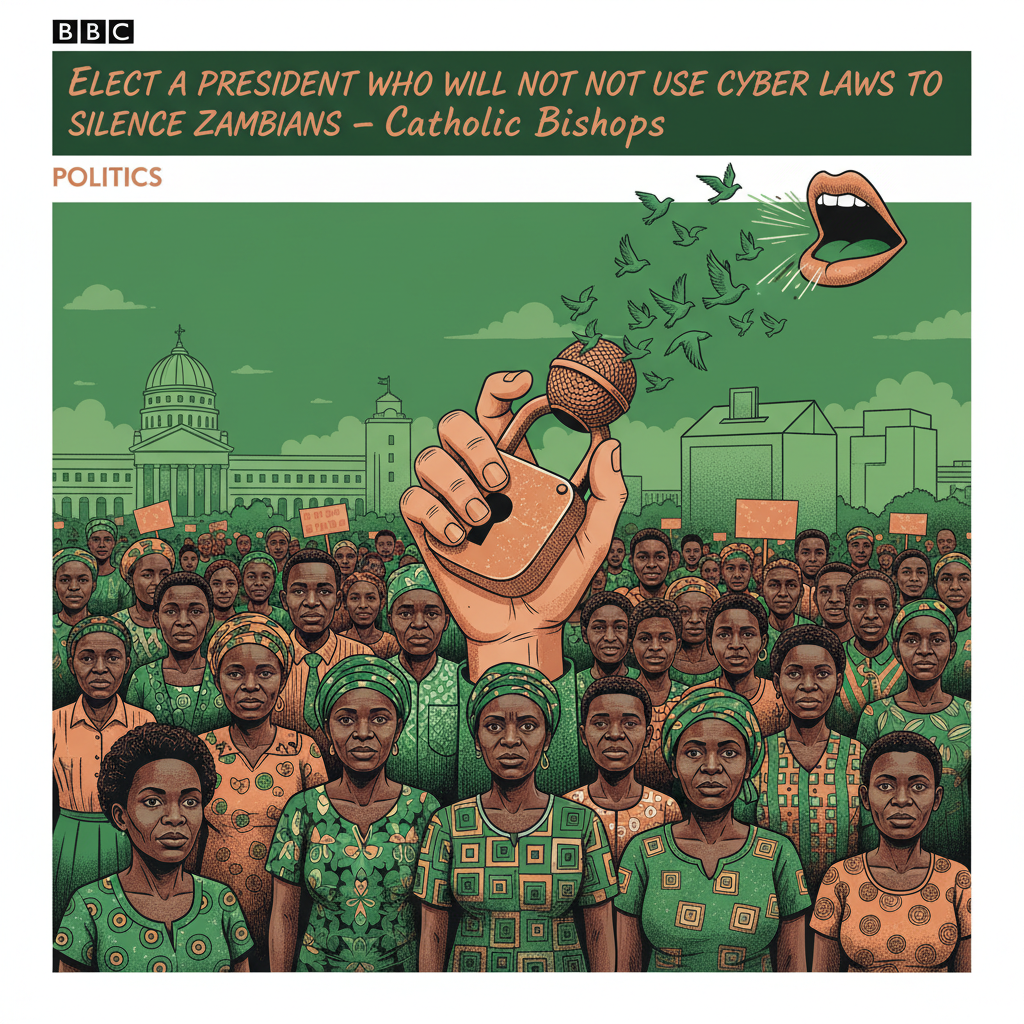
LUSAKA – The Zambia Conference of Catholic Bishops (ZCCB) has made a poignant appeal to the Zambian electorate, advocating for the election of a presidential candidate committed to safeguarding democratic freedoms and refraining from employing cyber laws to stifle public discourse. This significant intervention by a respected moral authority comes amidst heightened national debate surrounding the Cyber Security and Cyber Crimes Act of 2021, a piece of legislation that has drawn considerable criticism from various civil society organisations and human rights advocates for its perceived potential to curtail free speech. In their recent statement, the ZCCB emphasised that the upcoming general elections present a crucial opportunity for citizens to choose leaders who will champion transparency, accountability, and the unhindered expression of opinions, both online and offline. The bishops' message resonates deeply with a populace increasingly reliant on digital platforms for communication, information dissemination, and political engagement. They underscored the importance of a president who understands that a vibrant democracy thrives on open dialogue, even when such dialogue involves constructive criticism of those in power. Critics of the Cyber Security and Cyber Crimes Act have consistently argued that certain provisions within the law are overly broad and susceptible to abuse, potentially allowing the state to target dissenting voices under the guise of national security or public order. The ZCCB's call implicitly acknowledges these concerns, urging voters to consider a candidate's stance on human rights and constitutional liberties, particularly in the digital realm. The bishops' intervention is seen by many as a timely reminder to political aspirants that the exercise of power must always be balanced with respect for fundamental rights. Historically, the Catholic Church in Zambia has played a pivotal role in advocating for social justice, good governance, and